
Table of Contents
| Community Musicians, building a worldwide Community Music. | |
| All the music you want to play on one site. Sharing the world’s best Contemporary, jazz, Popular, and classical Sheet Music for all instruments. | |
| Scores: >15,000 (active and growing every day), over 231,000 pages All genres and Categories: Jazz & Blues, Rock & Pop, classical & contemporary, film & musicals’ scores; books & biographies; methods, études, and exercises; play along background MP3 audios & PDFs for Jazz & Rock Music Access and benefits: Subscription fee: $15.99 one-time payment, valid for lifetime (Secure Payment via Paypal, or Stripe) How to join the Sheet Music Library 🔍 Search in the Library Catalog — FAQs — Join us |
Carousel Waltz — from the Musical Carousel by Richard Rodgers (Piano Solo sheet music, Noten)
Carousel is the second musical from the team of Richard Rodgers (music) and Oscar Hammerstein II (book and lyrics). The 1945 work was adapted from Ferenc Molnár’s 1909 play Liliom, which transplanted its Budapest setting to the Maine coast.
Best Sheet Music download from our Library.
It is a love story between Billy Bigelow, the worker of a horse attraction and a miller, Julie Jordan, which puts their jobs in danger. In order to help Julie and her unborn child, he tries to pull off a robbery, which goes wrong. Despite everything, he is given the opportunity to do things right.
A secondary plot line deals with mill worker Carrie Pipperidge and her romance with ambitious fisherman Enoch Snow. The show includes the well-known songs ‘If I Loved You’, ‘June Is Bustin’ Out All Over’ and ‘Never Walk Alone’. Richard Rodgers later wrote that Carousel was his favorite of all his musicals.
After the spectacular success of Rodgers and Hammerstein’s early musicals, Oklahoma! (1943), the pair sought to collaborate on another piece, knowing that any resulting work would be compared to Oklahoma!, most likely unfavorably. Initially they were reluctant to seek the rights to Liliom; Molnár had refused permission to adapt the play in the past, and the original ending was considered depressing for musical theater.
Please, subscribe to our Sheet Music Library.
If you are already a subscriber, please, check our NEW SCORES’ page every month for new sheet music. THANK YOU!
After acquiring the rights, the team created a work with long music sequences and made the ending more hopeful.
The musical required considerable modification during out-of-town tryouts, but once it opened on Broadway on April 19, 1945, it was an immediate hit with critics and audiences. Carousel initially ran for around 890 performances and doubled its success in the West End in 1950. Although it has never achieved as much commercial success as Oklahoma!, the play has been repeated and recorded several times.
A production by Nicholas Hytner was successful in 1992 in London, in 1994 in New York and on tour. In 1999, Time magazine named Carousel the best musical of the 20th century.
Rodgers designed Carousel to be an almost continuous stream of music, especially in Act 1. In later years, Rodgers was asked if he had considered writing an opera. He stated that he had been sorely tempted to, but saw Carousel in operatic terms. He remembered, “We came very close to opera in the Majestic Theatre. … There’s much that is operatic in the music.”
| Artist or Composer / Score name | Cover | List of Contents |
|---|---|---|
| Stranger Things Main Theme Piano solo arr. (Musescore File).mscz | ||
| Stranger Things Music From The Netflix Original TV Series Piano Vocal Guitar |
 |
Stranger Things Music From The Netflix Original TV Series Piano Vocal Guitar |
| Strauss Johann – The Blue Danube Piano solo |
 |
|
| Strauss Richard – Also Sprach Zarathustra (Trans. R. Schmalz for Piano solo) |
 |
|
| Strauss – An Der Schönen Blauen Donau (Advanced Ver.) (Musescore File).mscz | ||
| Strauss – An Der Schönen Blauen Donau The Blue Danube (Easy Piano Solo) (Musescore File).mscz | ||
| Strauss – An Der Schönen Blauen Donau The Blue Danube (Intermediate Piano Solo) (Musescore File).mscz | ||
| Strauss Also sprach Zarathustra op. 30 (arr. for 2 pianos) |
 |
|
| Strauss Richard 4 Lieder Op. 27 No. 4 Morgen Musescore File.mscz | ||
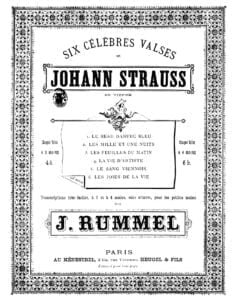
| Strauss, Johann Ii An Der Schönen Blauen Donau, Op.314 Jrummel Easy Piano Solo |
 |
|
| Strauss, Johann Ii Waatzes For Piano Op. 314 (Complete) |
 |
|
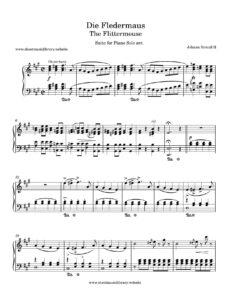
| Strauss, Johann II Die Fledermaus Suite for piano solo arr. |
 |
|
| Strauss, Johann Ii Die Fledermaus Suite For Piano Solo Arr. Musescore File.mscx | ||
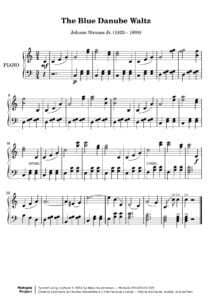
| Strauss, Johann Jr. – The Blue Danube Waltz (Easy Piano Solo) |
 |
|
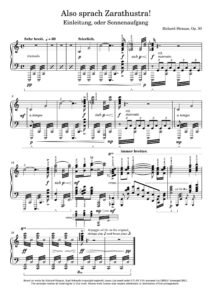
| Strauss, Richard Also Sprach Zarathustra, Op 30 Einleitung, Oder Sonnenaufgang (Solo Piano Arr) |
 |
|
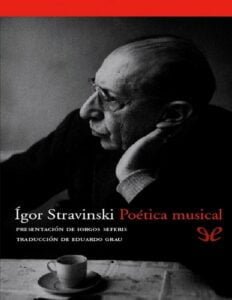
| Stravinski, Igor – Poetica Musical Book (Español – Spanish) |
 |
|
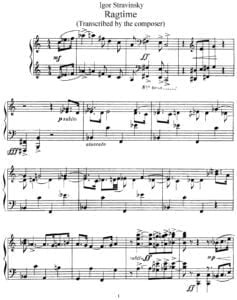
| Stravinsky Ragtime (Piano Solo, Transcribed By The Composer) |
 |
|
| Stravinsky The Firebird Suite Piano Transcription |
 |
|
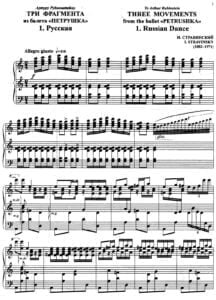
| Stravinsky Three Movements From Petrushka (piano solo arr.) |
 |
|
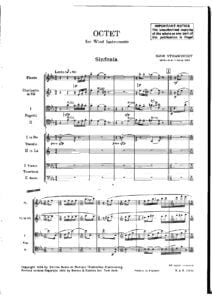
| Stravinsky – Octet for Wind Instruments |
 |
|
| Stravinsky – The Rite of Spring Le Sacre du printemps (4 hands, piano à 4 mains) | Stravinsky – The Rite of Spring Le Sacre du printemps (4 hands, piano à 4 mains) | |
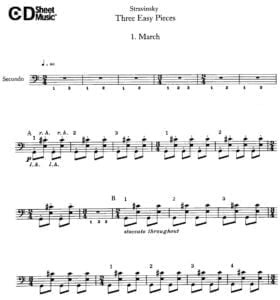
| Stravinsky 3 Easy pieces for piano 4 hands |
 |
|
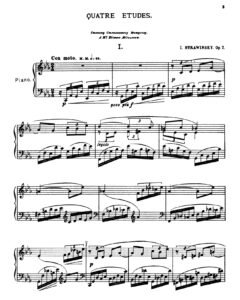
| Stravinsky 4 Etudes Op.7 |
 |
|
| Stravinsky And His World by Tamara Levitz (Book) |
 |
|
| Stravinsky Sonata F Sharp Minor |
 |
|
| Stravinsky Symphony of Psalms (arr. piano solo) | ||
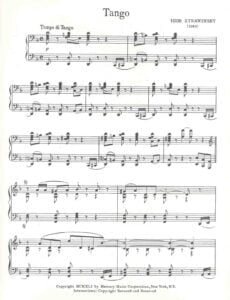
| Stravinsky Tango |
 |
|
| Stravinsky The Firebird Piano Transcription |
 |
Stravinsky: The Firebird |
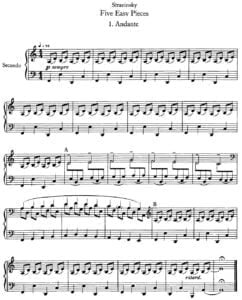
| Stravinsky, Igor 5 Easy Pieces [Piano 4 Hands] |
 |
|
| Stravinsky, Igor – The Rite of Spring Le Sacre du Printemps (piano solo) by Sam Raphling |
 |
|
| Stravinsky, Igor – The Rite of Spring Le Sacre du Printemps (piano solo) arr. by Vladimir Leyetchkiss |
 |
Stravinsky, Igor – The Rite of Spring Le Sacre du Printemps (piano solo) arr. by Vladimir Leyetchkiss |
| Strayhorn An Illustrated Life (Book) |
 |
|
| Straylight Run – Existentialism On Prom Night | ||
| Streabbog (Jean Louis Gobbaerts) – 12 Very Easy and Melodious Studies, op 63 | ||
| Streabbog 12 Twelve Very Easy and Melodious Studies Op. 63 |
 |
|
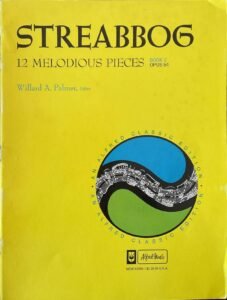
| Streabbog Book 2 Opus 64 12 Melodious Pieces For Piano |
 |
|
| Streabbog Fairy – Waltz Op. 105 n 1 | Streabbog Fairy – Waltz Op. 105 n 1 | |
| Stride & Swing Piano The Complete Guide (PDF + MP3 tracks play along) |
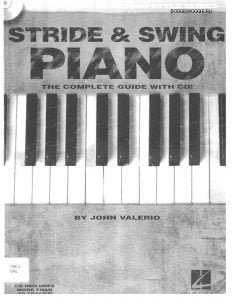 |
Stride & Swing Piano Stride & Swing Piano – The Complete Guide |
| Stride Piano Jazz Piano Solos Series Volume 35 |
 |
Stride Piano Jazz Piano Solos Series Volume 35 |
| Stuart K. Hine How Great Thou Art Arr Joel Raney 6 Concert Hymns Expressions For Solo Piano |
 |
|
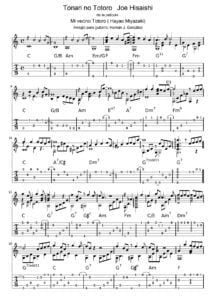
| Studio Ghibli Guitar Arrangements Best Album (Joe Hisaishi & Hayao Miyazaki) with Tablature |
 |
|
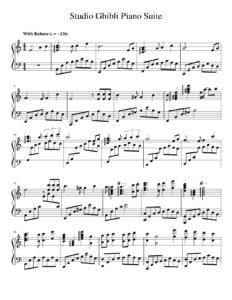
| Studio Ghibli Piano Suite |
 |
|
| Studio Ghibli Songs For Alto Sax And Piano |
 |
Studio Ghibli Songs For Alto Sax And Piano |
| Styx – Babe | ||
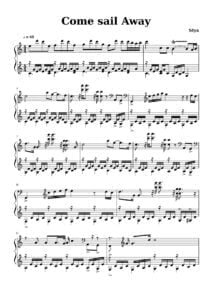
| Styx – Come Sail Away |
 |
|
| Succar Ya Banat (Caramel OST) Rasha Rizk | ||
| Suis-moi – Le Petit Prince OST (Hans Zimmer – Camille) | ||
| Sum 41 – Pieces | ||
| Summer of ’42 (Michel Legrand) | (In Miscelaneous) | |
| Summer of ’42 The Summer Knows Michel Legrand Piano & Voice |
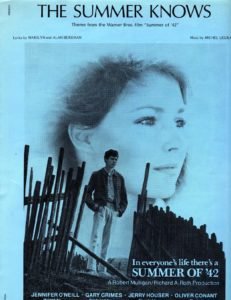 |
Summer of ’42 The Summer Knows Michel Legrand Piano & Voice |
| SUMMER OF’42 THE SUMMER KNOWS Piano (another version) Michel Legrand | THE SUMMER KNOWS -SUMMER OF’42 | |
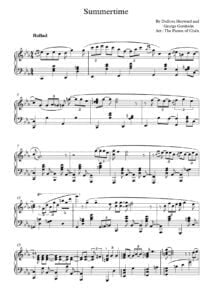
| Summertime – Piano arrangement Pianos Of Cha’n |
 |
|
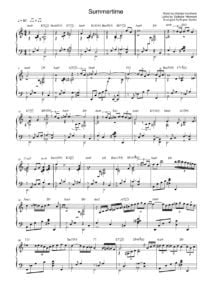
| Summertime G. Gershwin |
 |
|
| Sun And Moon from Miss Saigon Claude-Michel Schönberg and Alain Boublil | Sun And Moon from Miss Saigon Claude-Michel Schönberg and Alain Boublil | |
| Sun Ra sheet music Collection |
 |
1 Sun Ra index sheet music |
| Sunday Music (100 Arrangements For Piano Solo) E. Pauer |
 |
Sunday Music (100 Arrangements For Piano Solo) E. Pauer |
| Sunrise on Pontchartrain (The Curious Case of Benjamin Button OST) Alexandre Desplat | Sunrise on Pontchartrain | |
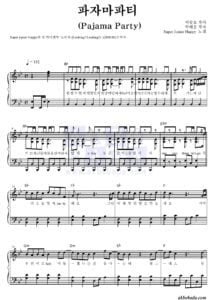
| Super Junior Pajama Party |
 |
|
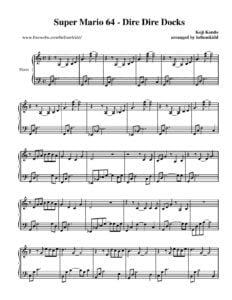
| Super Mario 64 – dire,dire docks |
 |
|
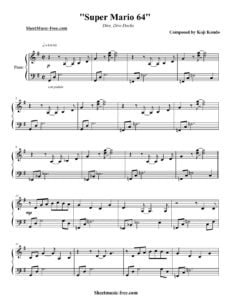
| Super Mario 64 by Koji Kondo – Piano |
 |
|
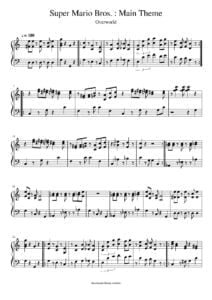
| Super Mario Bros – Main Theme | Super-Mario-Bros-Main-Theme | |
| Super Mario Bros – Main Theme Overworld |
 |
|
| Super Mario Bros – Main Theme Overworld (Musescore File).mscz | ||
| Super Mario Bros – Mario Main Theme – Koji Kondo | ||
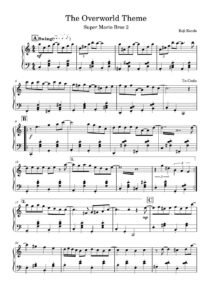
| Super Mario Bros 2 Overworld Theme by Koji Kondo Piano Solo |
 |
|
| Super Mario Bros 2 Complete Piano Arrangement |
 |
|
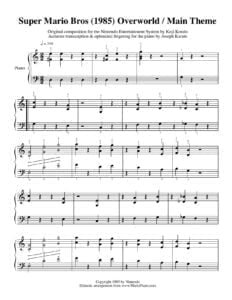
| Super Mario Bros Overworld Main Theme sheet music |
 |
|
| Super Mario Bros Songbook |
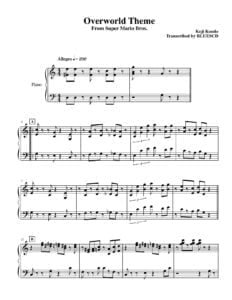 |
|
| Super Mario Bros. 3 Don’t stand on the Donuts – Piano Sheet Music |
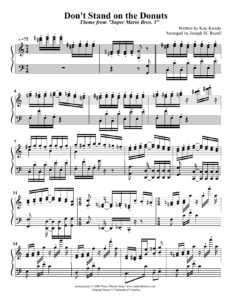 |
|
| Super Mario Galaxy – Aquatic Race |
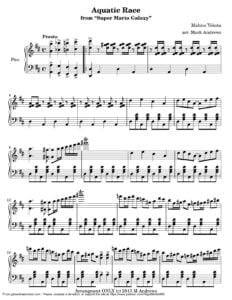 |
|
| Super Mario Galaxy – Attack! Koopas Fleet |
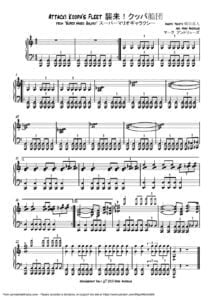 |
|
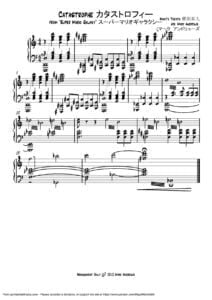
| Super Mario Galaxy – Catastrophe |
 |
|
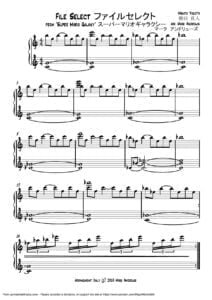
| Super Mario Galaxy – File Select |
 |
|
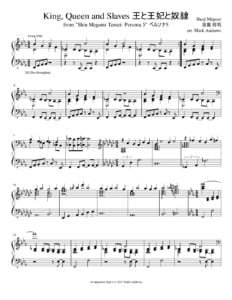
| Super Mario Galaxy – King Koopa’s Entrance |
 |
|
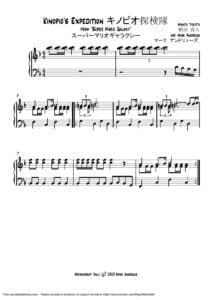
| Super Mario Galaxy – Kinopio’s Expedition |
 |
|
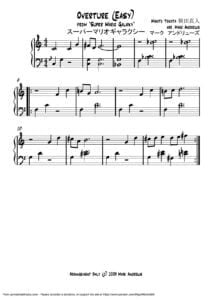
| Super Mario Galaxy – Overture |
 |
|
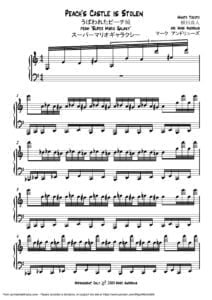
| Super Mario Galaxy – Peachs Castle is Stolen |
 |
|
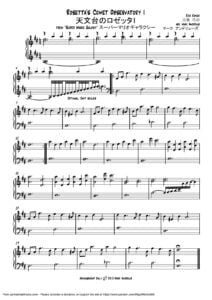
| Super Mario Galaxy – Rosetta’s Comet Observatory I |
 |
|
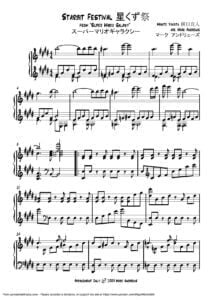
| Super Mario Galaxy – Starbit Festival |
 |
|
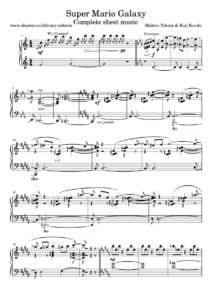
| Super Mario Galaxy Complete Sheet Music |
 |
|
| Super Mario Galaxy Sheet Music (Musescore File).mscz | ||
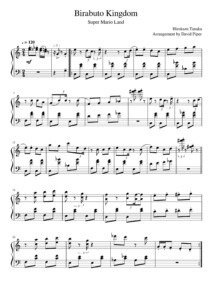
| Super Mario Land – Birabuto Kingdom by Hirokazu Tamaka |
 |
|
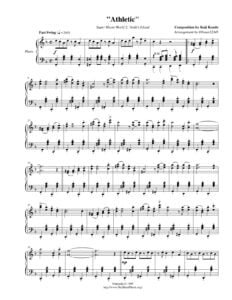
| Super Mario World 2 Yoshis Island – Athletic |
 |
|
| Super Sight Reading Secrets by Howard Richman (Book) for keyboard players |
 |
|
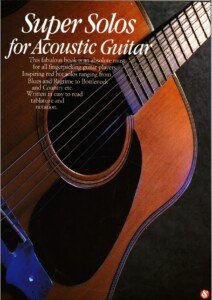
| Super Solos for Acoustic Guitar Solos (by Johnny Norris) Fingerpicking with Tablature |
 |
Super Solos for Acoustic Guitar Solos (by Johnny Norris) Fingerpicking with Tablature |
| Super Top Ten Volume (Guitar) |
 |
Super Top Ten Volume (Guitar) |
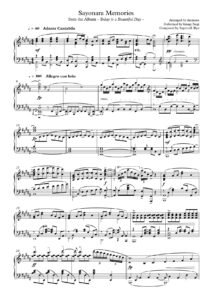
| Supercell – Sayonara Memories |
 |
|
| Supercell Guilty Crown OP 1 My Dearest Piano Solo | Supercell Guilty Crown OP 1 My Dearest Piano Solo | |
| Superhero Themes 14 of Your Favorite Heroes and She-Roes |
 |
Superhero Themes 14 of Your Favorite Heroes and She-Roes |
| Superman It’s Not Easy By John Ondrasik Piano Vocal Guitar Chords | Superman It’s Not Easy By John Ondrasik Piano Vocal Guitar Chords | |
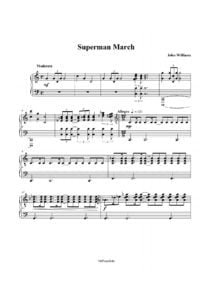
| Superman Theme For Piano |
 |
|
| Supertramp – Breakfast In America |
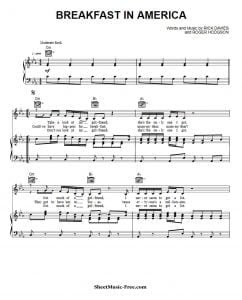 |
Supertramp Breakfast In America Book |
| Supertramp – Logical Song | ||
| Supertramp Anthology Songbook |
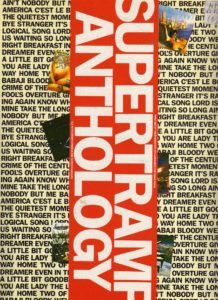 |
Supertramp Anthology Songbook |
| Supertramp Breakfast In America SongBook |
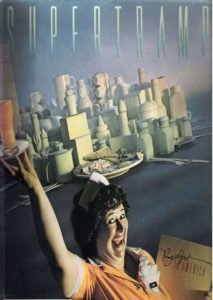 |
Supertramp Breakfast In America Book |
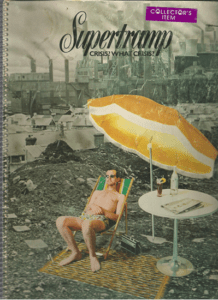
| Supertramp Crisis What Crisis SongBook |
 |
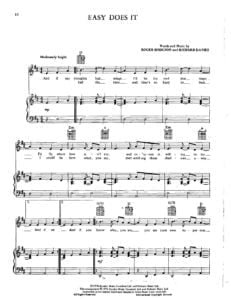 |
| Supertramp Even In The Quietest Moments Songbook |
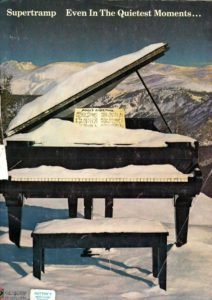 |
Supertramp Even In The Quietest Moments |
| Supertramp Famous Last Words SongBook |
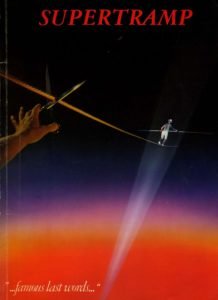 |
Supertramp Famous Last Words Book |
| Supertramp Fool s Overture Piano Vocal (Musescore file).mscz | Musescore File | |
| Supertramp Paris SongBook |
 |
Supertramp Paris Book |
| Supremes The Best of The Supremes Greatest Hits Piano Vocal Chords |
 |
Supremes The Best of The Supremes Greatest Hits Piano Vocal |
| Supremes, The Supremes Greatest Hits Piano Vocal Chords (Diana Ross, Mary Wilson, Florence Ballard) |
 |
Supremes, The Supremes Greatest Hits Piano Vocal Chords |
| Surface Pressure – Encanto (sheet music).mscz | ||
| Survivor Eye Of The Tiger Guitar Tabs Tablature | Survivor Eye Of The Tiger Guitar Tabs Tablature | |
| Survivor Eye Of The Tiger Piano Vocal Frank Sullivan Jim Peternik | Survivor Eye Of The Tiger Piano Vocal Frank Sullivan Jim Peternik Page 1 | |
| Survivor The Search Is Over Piano Vocal Guitar Chords Frank Sullivan Jim Peternik | Survivor The Search Is Over Piano Vocal Guitar Chords Frank Sullivan Jim Peternik | |
| Suzanne Ciani Adagio from the album Pianissimo | Suzanne-Ciani-Adagio 1st page | |
| Suzanne Ciani Dream Songs for piano |
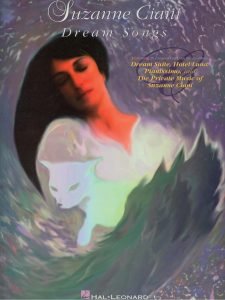 |
Suzanne Ciani Dream Songs piano |
| Suzanne Ciani New Age Piano |
 |
Suzanne Ciani New Age Piano |
| Suzanne Vega Songbook |
 |
Suzanne Vega Songbook |
| SUZUKI – Guitar School Revised Edition (Vol 1) |
 |
SUZUKI – Guitar School Revised Edition (Vol 1) |
| Suzuki Guitar (Complete Vol. 1 To 9) |
 |
SUZUKI GUITAR Vol 1-9 |
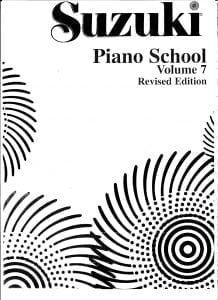
| Suzuki Piano School – Vol 07 – Mozart Handel and Paderevski |
 |
|
| Suzuki Piano School Volumes 1 to 7 (240 p.) |
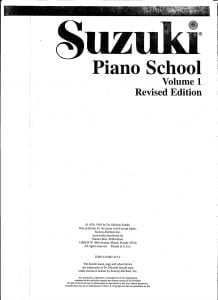 |
Suzuki 1-7 – Piano School (7 books) |
| Suzuki Tsunekichi – Omohi De – Irish Folk Song Opening Theme To The Netflix Series Midnight Diner Tokyo Stories) (Musescore File).mscz | ||
| Suzuki Tsunekichi – Omohi de – Irish Folk Song Opening theme to the Netflix series Midnight Diner Tokyo Stories) Guitar | Suzuki Tsunekichi – Omohi de – Irish Folk Song Opening theme to the Netflix series Midnight Diner Tokyo Stories) Guitar | |
| Suzuki Violin School Volume 1 Violin Part International Edition |
 |
|
| Sveinn Eythorsson – Easy Guitar Songs |
 |
|
| Swan Lake Theme – Tchaikovsky (Musescore File).mscz | ||
| Swanee River Boogie Woogie – Albert Ammons (Musescore File).mscz | ||
| Sweet Hour Of Prayer – Piano Solo arr. of 13 Sacred Songs by Marvin Goldstein |
 |
Sweet Hour Of Prayer – Piano Solo arr. of 13 Sacred Songs by Marvin Goldstein |
| Swing Low Sweet Charriot (Musescore File).mscz | ||
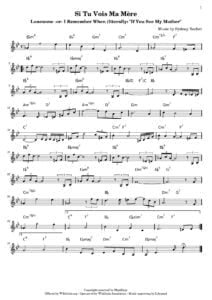
| Sydney Bechet Si Tu Vois Ma Mere Lead sheet music GUITAR CHORDS |
 |
|
| Symphony No 40 In Gm K550 (Musescore File).mscz | ||
| Symphony No 9 In E Minor (From The New World) For Piano – 1st Movement (Adagio – Allegro Molto) (Musescore File).mscz | ||
| Symphony No 9 In E Minor (From The New World) For Piano – 2nd Movement (Largo) (Musescore File).mscz | ||
| Symphony No 9 In E Minor 4th Mov. (From The New World) A. Dvorak (Musescore File).mscz | ||
| Symphony No. 2 Third Mov. Advanced Piano Arr. (Musescore File).mscz | ||
| Symphony No. 5 – Adagietto Gustav Mahler (Musescore File).mscz | ||
| System Of A Down – Lonely Day | ||
| T – Pain – Buy You A Drink | ||
| T-Bone Walker – Vital Blues Guitar (Note for Note transcriptions with Tablature) |
 |
T-Bone Walker – Vital Blues Guitar (Note for Note transcriptions with Tablature) |
| Tablature of Guitar Explained Tabulaturscheibweise Tablatura per chitarra Tablature de guitare | Tablature of Guitar Explained Tabulaturscheibweise Tablatura per chitarra Tablature de guitare | |
| Table for Two – Nocturnal Animals OST (Abel Korzeniowski) | ||
| Take Five (Musescore File).mscz | ||
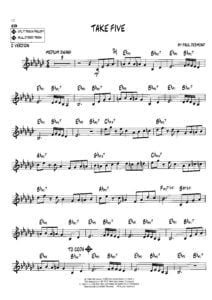
| Take Five by Paul Desmond Jazz Play Along |
 |
|
| Take Five Guitar by Chet Atkins.mscz | ||
| Take Five Jazz Standard by Paul Desmond arranged for Guitar by Chet Atkins with Tablature TABs | Take Five Jazz Standard by Paul Desmond arranged for Guitar by Chet Atkins with Tablature | |
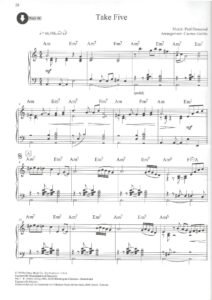
| Take Five Jazz Standard Paul Desmond Dave Brubeck arr. Carsten Gerlitz |
 |
|
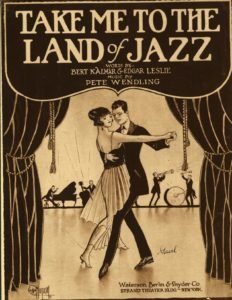
| Take Me To The Land Of Jazz by Pete Wendling (1919) |
 |
|
| Take That – Could It Be Magic | ||
| Take That – How Deep Is Your Love | Take That how-deep-is-your-love | |
| Take That Greatest Hits Piano Vocal Guitar Chords |
 |
Take That Greatest Hits Piano, Vocal, Guitar Chords |
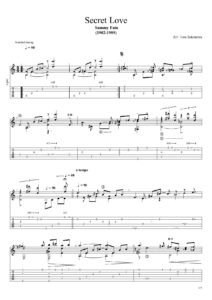
| Takemitsu – Secret Love Guitar with TABs |
 |
|
| Takemitsu For Away For Piano |
 |
|
| Takemitsu, Toru – 12 Songs for guitar |
 |
|
| Takemitsu, Toru – In the woods Three pieces for guitar |
 |
|
| Takemitsu, Toru – Piano Distance |
 |
|
| Tal Farlow Best Of Tal Farlow Guitar Recorded Versions With Tablature |
 |
Tal Farlow Best Of Tal Farlow Guitar Recorded Versions With Tablature |
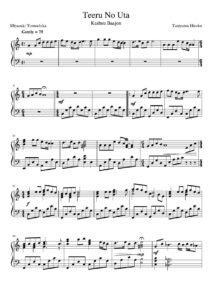
| Tales Of Earthsea Teeru No Uta Kashuu Baajon Taniyama Hiroko Miyazaki Tomochika |
 |
Musical numbers
| Act I “The Carousel Waltz” – Orchestra “You’re a Queer One, Julie Jordan” – Carrie Pipperidge and Julie Jordan “(When I Marry) Mister Snow” – Carrie “If I Loved You” – Billy Bigelow and Julie “June Is Bustin’ Out All Over” – Nettie Fowler and Chorus “(When I Marry) Mister Snow” (reprise) – Carrie, Enoch Snow and Female Chorus “When the Children Are Asleep” – Enoch and Carrie “Blow High, Blow Low” – Jigger Craigin, Billy and Male Chorus “Soliloquy” – Billy | Act II “This Was a Real Nice Clambake” – Carrie, Nettie, Julie, Enoch and Chorus “Geraniums in the Winder” – Enoch * “There’s Nothin’ So Bad for a Woman” – Jigger and Chorus “What’s the Use of Wond’rin’?” – Julie “You’ll Never Walk Alone” – Nettie “The Highest Judge of All” – Billy Ballet: “Billy Makes a Journey” – Orchestra “If I Loved You” (reprise) – Billy Finale: “You’ll Never Walk Alone” (reprise) – Company |
Rodgers uses music in Carousel in subtle ways to differentiate characters and tell the audience of their emotional state.
In “You’re a Queer One, Julie Jordan”, the music for the placid Carrie is characterized by even eighth-note rhythms, whereas the emotionally restless Julie’s music is marked by dotted eighths and sixteenths; this rhythm will characterize her throughout the show. When Billy whistles a snatch of the song, he selects Julie’s dotted notes rather than Carrie’s.
Reflecting the close association in the music between Julie and the as-yet unborn Louise, when Billy sings in “Soliloquy” of his daughter, who “gets hungry every night”, he uses Julie’s dotted rhythms. Such rhythms also characterize Julie’s Act 2 song, “What’s the Use of Wond’rin’”.
The stable love between Enoch and Carrie is strengthened by her willingness to let Enoch not only plan his entire life, but hers as well. This is reflected in “When the Children Are Asleep”, where the two sing in close harmony, but Enoch musically interrupts his intended’s turn at the chorus with the words “Dreams that won’t be interrupted”.
Rodgers biographer Geoffrey Block, in his book on the Broadway musical, points out that though Billy may strike his wife, he allows her musical themes to become a part of him and never interrupts her music.
Block suggests that, as reprehensible as Billy may be for his actions, Enoch requiring Carrie to act as “the little woman”, and his having nine children with her (more than she had found acceptable in “When the Children are Asleep”) can be considered to be even more abusive.
The twelve-minute “bench scene”, in which Billy and Julie get to know each other and which culminates with “If I Loved You”, according to Hischak, “is considered the most completely integrated piece of music-drama in the American musical theater”.
The scene is almost entirely drawn from Molnár and is one extended musical piece; Stephen Sondheim described it as “probably the single most important moment in the revolution of contemporary musicals”. “If I Loved You” has been recorded many times, by such diverse artists as Frank Sinatra, Barbra Streisand, Sammy Davis Jr., Mario Lanza and Chad and Jeremy.
The D-flat major theme that dominates the music for the second act ballet seems like a new melody to many audience members. It is, however, a greatly expanded development of a theme heard during “Soliloquy” at the line “I guess he’ll call me ‘The old man’ “.
When the pair discussed the song that would become “Soliloquy”, Rodgers improvised at the piano to give Hammerstein an idea of how he envisioned the song. When Hammerstein presented his collaborator with the lyrics after two weeks of work (Hammerstein always wrote the words first, then Rodgers would write the melodies), Rodgers wrote the music for the eight-minute song in two hours.
“What’s the Use of Wond’rin’ “, one of Julie’s songs, worked well in the show but was never as popular on the radio or for recording, and Hammerstein believed that the lack of popularity was because he had concluded the final line, “And all the rest is talk” with a hard consonant, which does not allow the singer a vocal climax.
Irving Berlin later stated that “You’ll Never Walk Alone” had the same sort of effect on him as the 23rd Psalm. When singer Mel Tormé told Rodgers that “You’ll Never Walk Alone” had made him cry, Rodgers nodded impatiently. “You’re supposed to.” The frequently recorded song has become a widely accepted hymn.
The cast recording of Carousel proved popular in Liverpool, like many Broadway albums, and in 1963, the Brian Epstein-managed band, Gerry and the Pacemakers had a number-one hit with the song. At the time, the top ten hits were played before Liverpool F.C. home matches; even after “You’ll Never Walk Alone” dropped out of the top ten, fans continued to sing it, and it has become closely associated with the soccer team and the city of Liverpool.
A BBC program, Soul Music, ranked it alongside “Silent Night” and “Abide With Me” in terms of its emotional impact and iconic status.
Browse in the Library:
Or browse in the categories menus & download the Library Catalog PDF: