Table of Contents
| Community Musicians, building a worldwide Community Music. | |
| All the music you want to play on one site. Sharing the world’s best Contemporary, jazz, Popular, and classical Sheet Music for all instruments. | |
| Scores: >15,000 (active and growing every day), over 231,000 pages All genres and Categories: Jazz & Blues, Rock & Pop, classical & contemporary, film & musicals’ scores; books & biographies; methods, études, and exercises; play along background MP3 audios & PDFs for Jazz & Rock Music Access and benefits: Subscription fee: $15.99 one-time payment, valid for lifetime (Secure Payment via Paypal, or Stripe) How to join the Sheet Music Library 🔍 Search in the Library Catalog — FAQs — Join us |
Queen: Bohemian Rhapsody – PIANO SOLO arr. sheet music, Noten, partitura, spartiti, 楽譜, 乐谱
Please, subscribe to our Sheet Music Library.
If you are already a subscriber, please, check our NEW SCORES’ page every month for new sheet music. THANK YOU!

Best Sheet Music download from our Library.

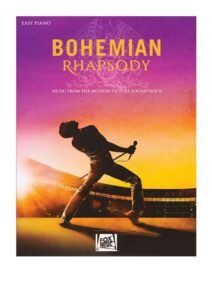
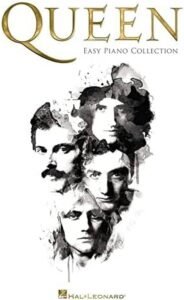



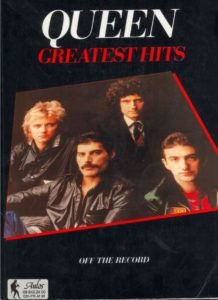

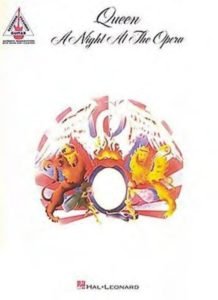

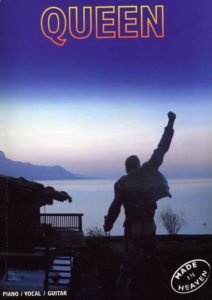
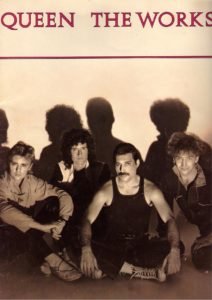
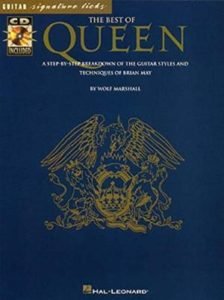
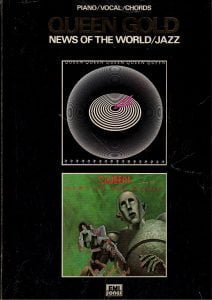

Browse in the Library:
Or browse in the categories menus & download the Library Catalog PDF:
Queen: A Coronation in Rock – The Band, artistry, and enduring legacy
Queen stands as a colossus in the landscape of popular music, a band whose ambition, virtuosity, theatricality, and sheer songwriting power transcended genres and generations. Formed in London in 1970, the quartet of Freddie Mercury, Brian May, Roger Taylor, and John Deacon forged a unique sonic identity that blended hard rock, glam, pop, opera, disco, and vaudeville into anthems of unparalleled scale and intimacy. More than just hitmakers, they were sonic architects, studio innovators, and arguably the greatest live band ever witnessed. Their legacy is not merely a catalogue of songs; it’s a testament to the boundless possibilities of rock music when fueled by fearless creativity and exceptional individual talent.
Biography: From Smile to Stardom to Immortality
- Origins (1968-1970): The roots lie in the band Smile, formed by Imperial College London astrophysics student Brian May (guitar, vocals) and dentistry student Roger Taylor (drums, vocals), with Tim Staffell on bass and lead vocals. Staffell introduced them to Farrokh Bulsara, a flamboyant art student and fan.
- Formation & Early Struggles (1970-1973): When Staffell left Smile in 1970, Bulsara seized the moment. Adopting the name Freddie Mercury, he joined May and Taylor, convinced them to change the band name to Queen, and radically reimagined their direction. After cycling through several bassists, the line-up solidified in 1971 with the recruitment of quiet electronics student John Deacon. They honed their sound and image through relentless gigging on the UK college circuit, developing complex harmonies and Mercury’s captivating stage persona. They signed with EMI and Trident Productions in 1972.
- Breakthrough and Rise (1974-1975): Their self-titled debut album (1973) showed promise, but it was the hard-rocking ‘Queen II’ (1974) and the Mercury-penned single “Seven Seas of Rhye” that provided their first UK hit. The true breakthrough came with ‘Sheer Heart Attack’ (1974), a masterpiece of eclecticism featuring the global smash “Killer Queen” (showcasing May’s unique guitar tone and Mercury’s sophisticated lyrics/vocals) and the proto-speed metal of “Stone Cold Crazy.” This set the stage for global domination.
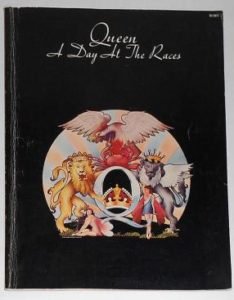
- Global Superstardom (1975-1979): ‘A Night at the Opera’ (1975) remains a landmark album in rock history. Defying all expectations (and budget constraints), its centerpiece, “Bohemian Rhapsody,” became a worldwide phenomenon – a six-minute mini-opera blending balladry, hard rock, and a mock-operatic section, accompanied by a groundbreaking music video. The album also contained the perennial anthem “You’re My Best Friend” (Deacon’s first major hit) and the majestic “Love of My Life.” Success continued with ‘A Day at the Races’ (1976), ‘News of the World’ (1977 – featuring the stadium-stomping anthems “We Will Rock You” and “We Are The Champions“), and ‘Jazz’ (1978 – containing the controversial “Bicycle Race” and “Fat Bottomed Girls“).
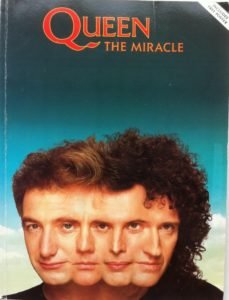
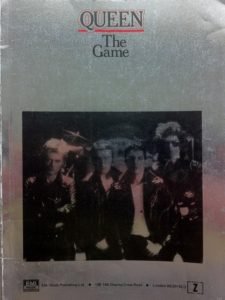
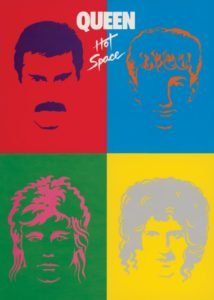
- Experimentation and Continued Dominance (1980-1989): The 80s saw Queen embrace new sounds while maintaining their core identity. ‘The Game’ (1980) was a massive success, featuring their first US #1, the Mercury-penned disco-rock hybrid “Another One Bites the Dust” (built on Deacon’s iconic bassline), and the rockabilly-inspired “Crazy Little Thing Called Love.” They ventured into film soundtracks with the Flash Gordon album (1980). ‘Hot Space’ (1982) leaned heavily into funk and disco, alienating some rock fans but yielding the Michael Jackson collaboration “State of Shock” and the soulful “Under Pressure” (with David Bowie). They returned to rock roots with ‘The Works’ (1984 – “Radio Ga Ga,” “I Want to Break Free” with its infamous cross-dressing video), ‘A Kind of Magic’ (1986 – soundtrack to Highlander, featuring the title track and “Who Wants to Live Forever“), and ‘The Miracle’ (1989).
- Final Chapter and Freddie’s Passing (1990-1991): Despite Freddie Mercury’s private battle with AIDS, the band worked tirelessly. ‘Innuendo’ (1991) was a powerful and diverse final statement recorded while Mercury was increasingly ill, featuring the epic title track, the flamenco-infused “I’m Going Slightly Mad,” and the poignant “The Show Must Go On,” a testament to Mercury’s indomitable spirit. Freddie Mercury died on November 24, 1991, just one day after publicly confirming his illness. The music world mourned.
- Legacy and Continuation (1992-Present): The Freddie Mercury Tribute Concert for AIDS Awareness (1992) at Wembley Stadium was a historic event featuring rock royalty. Queen officially continued with various vocalists, most notably Paul Rodgers (as Queen + Paul Rodgers, 2004-2009) and currently Adam Lambert (Queen + Adam Lambert, 2011-Present), successfully touring the globe and introducing Queen’s music to new generations. John Deacon retired from music in 1997. The band’s legacy was cemented by the massively successful biopic Bohemian Rhapsody (2018).
The Members: Four Distinct Geniuses
- Freddie Mercury (Farrokh Bulsara) (1946-1991):
- Role: Lead Vocals, Piano, Keyboards, Primary Songwriter (initially dominant, later shared).
- Biography: Born in Zanzibar to Parsi-Indian parents, educated in India (where he studied classical piano) and England. Flamboyant, charismatic, intensely private.
- Contribution: One of the greatest frontmen and vocalists in rock history. Possessed a phenomenal four-octave vocal range capable of incredible power, delicate tenderness, and operatic flourish. A dynamic, theatrical performer who commanded stadiums. A prolific and eclectic songwriter (“Bohemian Rhapsody,” “Killer Queen,” “Somebody to Love,” “Don’t Stop Me Now,” “Crazy Little Thing Called Love,” “Barcelona”). Master of melody, harmony, and lyrical playfulness/theatricality.
- Brian May (1947-Present):
- Role: Guitar, Vocals, Keyboards, Songwriter, Astrophysicist.
- Biography: Born in Hampton, England. Studied physics and mathematics at Imperial College London (PhD in Astrophysics completed in 2007!). Built his iconic guitar, the “Red Special,” with his father from fireplace wood and motorcycle parts.
- Contribution: Defined a unique, orchestral guitar sound – rich, singing sustain, harmonic richness. Pioneered extensive use of delay, harmonizers, and multi-tracking to create layered “guitar orchestras.” A master of melody and composition (“We Will Rock You,” “Who Wants to Live Forever,” “The Show Must Go On,” “Save Me,” “Hammer to Fall”). Provided distinctive backing vocals (high harmonies). The intellectual and sonic architect.
- Roger Taylor (Roger Meddows-Taylor) (1949-Present):
- Role: Drums, Percussion, Vocals, Songwriter.
- Biography: Born in King’s Lynn, England. Studied dentistry briefly before focusing on biology, then music. Powerful, energetic drummer with a distinctive high-pitched raspy scream and strong falsetto.
- Contribution: Provided the powerful, driving rhythmic foundation and explosive fills. Exceptional backing vocalist and lead vocalist on his own compositions (“Radio Ga Ga,” “A Kind of Magic,” “I’m in Love with My Car,” “Tenement Funster”). A prolific songwriter often contributing harder-edged rockers or synth-driven pop. The band’s energetic powerhouse.
- John Deacon (1951-Present):
- Role: Bass Guitar, Keyboards, Guitar, Songwriter.
- Biography: Born in Leicester, England. Studied electronics at Chelsea College, London. The quietest member, known for his calm demeanor and melodic bass playing.
- Contribution: Provided rock-solid, inventive, and often melodic basslines that were the essential glue and groove of Queen’s sound (“Another One Bites the Dust” being the pinnacle). A superb songwriter who penned some of their biggest hits (“You’re My Best Friend,” “Spread Your Wings,” “I Want to Break Free,” “Another One Bites the Dust”). The quiet anchor and melodic secret weapon.
Music Style: A Kaleidoscope of Sound
Queen’s style is notoriously difficult to pin down, defined by its sheer eclecticism and refusal to be confined. Key elements include:
- Hard Rock Foundation: Early albums were rooted in heavy, complex rock (“Son and Daughter,” “Stone Cold Crazy,” “Tie Your Mother Down,” “Brighton Rock”).
- Glam/Theatricality: Mercury’s persona, elaborate stage shows, and songs like “Killer Queen” and “The Fairy Feller’s Master-Stroke” embraced glam rock’s theatricality and artifice.
- Progressive Tendencies: Multi-sectioned compositions, complex arrangements, studio experimentation (“Bohemian Rhapsody,” “The March of the Black Queen,” “Innuendo,” “The Prophet’s Song”).
- Pop Sensibility: An uncanny ability to craft irresistible pop melodies and hooks (“Crazy Little Thing Called Love,” “You’re My Best Friend,” “Don’t Stop Me Now,” “I Want to Break Free”).
- Operatic Flair: Mercury’s vocal delivery and the band’s love for grand harmony stacks and dramatic shifts (“Bohemian Rhapsody,” “My Fairy King,” “The Millionaire Waltz,” “Who Wants to Live Forever”).
- Funk/Disco: Embracing 70s/80s dance trends (“Another One Bites the Dust,” “Body Language,” “Staying Power”).
- Vaudeville/Music Hall: Playful, piano-driven ditties (“Seaside Rendezvous,” “Lazing on a Sunday Afternoon,” “Good Old-Fashioned Lover Boy”).
- Anthemic Quality: Songs built for mass participation, often featuring simple, powerful riffs or rhythms (“We Will Rock You,” “We Are The Champions,” “Hammer to Fall,” “Radio Ga Ga”).
Improvisational Licks: May’s Sonic Signature
While Queen’s studio work was meticulously crafted, live performance offered space for improvisation, primarily from Brian May:
- The “May Sound”: Centered around his homemade Red Special guitar (with its unique pickups and tremolo) played with a sixpence coin. Produced a singing, violin-like sustain.
- Harmonized Lead Lines: Using custom-built delays (like the Deacy Amp) and later harmonizers, May would often improvise harmonized guitar lines live, creating a signature orchestral texture.
- Blues-Based Phrasing with a Twist: Rooted in blues scales, but infused with classical melodic sensibility, dramatic vibrato, and unexpected intervallic leaps. Solos often built from simple motifs developed with increasing intensity (“Brighton Rock” extended solo is the definitive example, also “Now I’m Here,” “Keep Yourself Alive” live).
- Tapping & Effects: Early, tasteful adopter of tapping techniques (pre-Van Halen), often combined with delay for cascading effects. Used wah-wah expressively, not just as a filter.
- Call and Response: Frequently engaged in improvised call-and-response interplay with Mercury’s vocals during live jams.
Chord Progressions and Music Harmony: Beyond Power Chords
Queen’s harmonic language was sophisticated and adventurous, far exceeding standard rock tropes:
- Vocal Harmony as Instrument: Their defining feature. Used complex, multi-layered stacks (sometimes 100+ tracks) of backing vocals – operatic choirs, doo-wop groups, barbershop quartets – creating rich, shifting harmonic textures (“Bohemian Rhapsody,” “Somebody to Love,” “The Prophet’s Song,” “Good Old-Fashioned Lover Boy”). Frequent use of close harmonies and parallel movement.
- Modal Interchange & Borrowed Chords: Freely mixed chords from parallel major/minor keys (e.g., using a iv chord in a major key). “Killer Queen” uses chords borrowed from the parallel minor (Bb major song using Gb and Eb minor chords). “The Millionaire Waltz” shifts keys and modes fluidly.
- Chromaticism & Unexpected Shifts: Progressions often featured chromatic passing chords or surprising modulations. The verse of “Bohemian Rhapsody” moves chromatically (Bb – A – Bbm – A – D – Gm). The operatic section is a masterclass in abrupt, dramatic key changes.
- Functional Harmony with a Twist: While often using strong functional progressions (I-IV-V, ii-V-I), they subverted expectations with added extensions (7ths, 9ths, 13ths), suspensions, and inversions. “You Take My Breath Away” features lush, jazz-influenced extended chords.
- Bass-Led Harmony: Deacon’s basslines often defined the harmonic movement, sometimes implying chords different from the guitar (“Another One Bites the Dust”).
- Piano-Driven Harmony: Mercury’s piano work provided complex harmonic foundations, ranging from ballad simplicity (“Love of My Life”) to quasi-classical complexity (“Bohemian Rhapsody,” “The March of the Black Queen”).
Influences: A Diverse Pantheon
Queen absorbed influences voraciously:
- Rock Pioneers: The Beatles (songwriting, studio experimentation, harmony), The Who (power, live energy), Led Zeppelin (heavy riffs, dynamics), Jimi Hendrix (guitar innovation), Cream.
- Glam Rock: David Bowie (theatricality, persona), Marc Bolan/T. Rex (glam stomp).
- Progressive Rock: Yes (complexity, vocal arrangements), Genesis.
- Soul/Funk: James Brown, Chic (groove influence, especially on Deacon).
- Disco: The Bee Gees, Giorgio Moroder (influenced their 80s dance period).
- Musical Theatre & Opera: Gilbert and Sullivan (wit, theatricality), Verdi, Puccini (grandeur, vocal style).
- Jazz & Music Hall: Vaudeville traditions, cabaret.
Legacy: The Champions Endure
Queen’s legacy is immense and multifaceted:
- Musical Innovation: Pioneers of music video, studio production techniques (overdubbing, harmonizers), and genre fusion.
- Live Performance: Set the benchmark for stadium rock spectacle, audience participation, and technical prowess.
- Cultural Impact: Their anthems are embedded in global culture (“We Will Rock You/Champions” at sports events worldwide). Freddie Mercury became an enduring LGBTQ+ icon.
- Influence: Countless artists cite Queen as an influence across rock, pop, metal, and beyond (Metallica, Guns N’ Roses, Muse, Lady Gaga, Katy Perry, My Chemical Romance).
- Enduring Popularity: Consistently rank among the best-selling and most-streamed artists decades after their peak. Bohemian Rhapsody film reignited global passion.
- AIDS Awareness: Mercury’s death and the subsequent Tribute Concert significantly raised global awareness and funds for AIDS research.
Works: Beyond the Studio Albums
- Non-Album Singles: “See What A Fool I’ve Been,” “Thank God It’s Christmas,” various B-sides.
- Collaborations: “Under Pressure” (David Bowie), “State of Shock” (The Jacksons), Freddie Mercury’s solo work (especially “Barcelona” with Montserrat Caballé).
Filmography
- Concert Films: Queen Rock Montreal (1981), Live at Wembley ’86 (1992), On Fire at the Bowl (1982/2004), Hungarian Rhapsody: Queen Live in Budapest ’86 (2012), Queen + Adam Lambert Live Around the World (2020).
- Documentaries: The Magic Years (1987), Champions of the World (1995), Days of Our Lives (2011), Queen: The American Dream (2018).
- Music Videos: Pioneered the art form (“Bohemian Rhapsody,” “I Want to Break Free,” “Radio Ga Ga,” “A Kind of Magic”).
- Soundtracks: Flash Gordon (1980), Highlander (1986 – A Kind of Magic album), Wayne’s World (1992 – featured “Bohemian Rhapsody”).
- Biopic: Bohemian Rhapsody (2018).
- Appearances: Saturday Night Live (1982), The Kenny Everett Video Show.
Discography: Studio Albums
- Queen (1973)
- Queen II (1974)
- Sheer Heart Attack (1974)
- A Night at the Opera (1975)
- A Day at the Races (1976)
- News of the World (1977)
- Jazz (1978)
- The Game (1980)
- Flash Gordon (Soundtrack) (1980)
- Hot Space (1982)
- The Works (1984)
- A Kind of Magic (1986)
- The Miracle (1989)
- Innuendo (1991)
- Made in Heaven (1995 – featuring final Mercury recordings)
(Numerous live albums, compilations – Greatest Hits I & II are among the best-selling albums ever in the UK)
Most Known Compositions (Analysis & Impact)
- “Bohemian Rhapsody” (1975): The ultimate Queen statement. Ballad, guitar solo, operatic farce, hard rock finale. Harmonic complexity (chromaticism, modulations), vocal tour-de-force (over 180 vocal overdubs), lyrical enigma. Revolutionized production and music video. Enduring cultural phenomenon.
- “We Will Rock You” / “We Are The Champions” (1977): Quintessential anthems. “We Will Rock You” is primal rhythm (stomp-stomp-clap) and minimalist May guitar. “Champions” is a triumphant, perfectly structured ballad with a soaring chorus. Synonymous with victory and collective experience.
- “Another One Bites the Dust” (1980): Deacon’s masterstroke. Hypnotic, funky bassline driving the entire song. Minimalist arrangement, Mercury’s cool vocal delivery. Massive crossover hit, defining their funk/disco period.
- “We Are the Champions” (1977): See above. Stands alone perfectly as a universal anthem of perseverance and triumph.
- “Crazy Little Thing Called Love” (1979): Mercury’s Elvis homage. Simple, effective rockabilly progression (I-IV-V), sparse arrangement, showcasing his versatility and pop brilliance. Massive hit.
- “Somebody to Love” (1976): Gospel-infused rock tour-de-force. Complex vocal arrangement mimicking a gospel choir over a driving rock track. Mercury’s vocal performance is staggering in its power and emotion.
- “Don’t Stop Me Now” (1978): Euphoric piano-driven rocker. Relentless energy, cascading piano, Mercury’s exuberant vocal, May’s soaring guitar solo. Pure, unadulterated joy. A late-blooming global smash.
- “Killer Queen” (1974): Their breakthrough sophistication. Jazz-inflected chords (borrowed chords, chromaticism), witty, decadent lyrics, intricate vocal harmonies, May’s bell-like guitar tone. Defined their early glam/prog phase.
- “Radio Ga Ga” (1984): Taylor’s synth-pop anthem. Driving beat, memorable synth hook, massive singalong chorus (“All we hear is Radio ga ga!”). A commentary on media, became a live staple.
- “I Want to Break Free” (1984): Deacon’s synth-pop gem. Iconic cross-dressing video, memorable synth bassline, powerful chorus. Banned by MTV in the US but a huge hit elsewhere.
Most Known Performances
- Live Aid (Wembley Stadium, July 13, 1985): Universally hailed as the greatest live rock performance ever. A 20-minute set (“Bohemian Rhapsody,” “Radio Ga Ga,” “Hammer to Fall,” “Crazy Little Thing Called Love,” “We Will Rock You,” “We Are The Champions”) that captured the entire essence of Queen and electrified the global audience. Defined stadium rock performance.
- Rock Montreal (1981): Captured at the peak of their early 80s powers. Immense energy, tight performance, featured on a definitive concert film.
- Wembley Stadium (July 12, 1986): The Magic Tour finale. Monumental spectacle, emotional intensity, documented on the classic Live at Wembley ’86.
- Hungarian Rhapsody: Budapest (1986): Performed behind the Iron Curtain to a rapturous crowd of 80,000. Showcased their global reach and the unifying power of their music.
- Freddie Mercury Tribute Concert (1992): An emotionally charged celebration featuring legendary artists performing Queen songs. Highlights include Robert Plant’s “Innuendo,” George Michael’s “Somebody to Love,” and the surviving members’ closing set.
- Queen + Adam Lambert: Various Tours (2011-Present): Demonstrating the enduring power of the music and the band’s ability to reinvent the live experience for new eras with spectacular production.
Queen: The Crown Remains
Queen was a singularity. Four extraordinary musicians, each a master of their craft, colliding to create music that was simultaneously grandiose and intimate, complex and accessible, hard-rocking and melodically sublime. They pushed the boundaries of studio production, redefined the rock concert as a communal spectacle, and crafted anthems that continue to resonate with visceral power. Freddie Mercury’s voice and charisma were irreplaceable, but the music he created with Brian May, Roger Taylor, and John Deacon possesses an enduring magic. They were champions who rocked the world, and decades later, their crown remains firmly in place, glittering as brightly as ever in the pantheon of rock and roll royalty. Their show, truly, goes on.
Queen Greatest Hits Full Album – Classic Rock Songs 70s 80s 90s Full Album
Browse in the Library:
Or browse in the categories menus & download the Library Catalog PDF: