
Scores for all instruments: 16,000+ (active and growing), over 236,000 pages.
All genres and levels: Jazz & Blues, Rock & Pop, Classical & Contemporary, Film & Musicals;
books & biographies; methods, études, play-along tracks (MP3) for Jazz & Rock.
Access & benefits: US$15.99 one-time payment, valid for lifetime, full Library access.
Table of Contents
The Legendary Burl Ives: Concert in Oslo, Norway (Live 1978)
The Legendary Burl Ives: Concert in Oslo, Norway (Live 1978)(ULTRA-RARE) In Memory Of Burl Icle Ivanhoe Ives (June 14, 1909 – April 14, 1995) Oslo, Norway, August 1978.
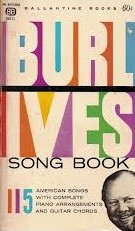
The best sheet music download from our Library.












Please, subscribe to our Sheet Music Library.
Burl Ives was far more than just the comforting voice of Christmas; he was a complex and towering figure whose career spanned over six decades across folk, country, Broadway, and Hollywood. From a wandering troubadour to an Oscar-winning actor, his life story is one of immense talent and controversy. This article delves into the exhaustive biography, multifaceted music style, harmonic simplicity, intricate relationships, enduring legacy, and comprehensive body of work of Burl Ives.
Early Life and Biography
Burl Icle Ivanhoe Ives was born on June 14, 1909, in Hunt City, a small unincorporated town in Jasper County, Illinois. He was one of seven children born to Levi "Frank" Ives, a farmer and later a county contractor, and Cordelia "Dellie" (née White). His musical journey began in the most unassuming of ways. As a young boy, he was overheard singing in the garden with his mother by an uncle, who invited him to perform at a local soldiers' reunion. The boy sang the traditional folk ballad "Barbara Allen" and left the audience impressed.
Ives graduated from Newton High School in 1927 and briefly attended Eastern Illinois State Teachers College (now Eastern Illinois University) from 1927 to 1929, where he played football. However, as the legend goes, he walked out of an English class during a lecture on Beowulf, realizing academia was not his path. He slammed the door so hard that the glass shattered—a fitting metaphor for his forceful exit from conventional life. Decades later, the university would name a building after its most famous dropout. He was also a member of the Order of DeMolay and was initiated into Scottish Rite Freemasonry in 1927, eventually attaining the 33rd and highest degree.
Embracing the life of an itinerant singer during the early 1930s, Ives traveled across the United States, earning his keep with odd jobs and his banjo. His travels were not without hardship; he was famously jailed in Mona, Utah, for vagrancy and for singing "Foggy Dew," which local authorities deemed a bawdy song. He also attended classes at Indiana State Teachers College and later, in 1933, the Juilliard School in New York. In 1939, he made his Broadway debut with a small role in Rodgers and Hart's hit musical The Boys from Syracuse.
Music Career and Style
The "Wayfaring Stranger" Persona
In 1940, Ives launched his own CBS radio show, which he titled The Wayfaring Stranger after one of his popular ballads. This show was instrumental in popularizing traditional American folk music. Over the next decade, he introduced a mainstream audience to songs like "Foggy Dew," "The Blue Tail Fly" (also known as "Jimmy Crack Corn"), and the hobo anthem "Big Rock Candy Mountain". His early recordings, including albums like Okeh Presents the Wayfaring Stranger (1941) and The Wayfaring Stranger (1944), cemented his reputation as a premier interpreter of folk ballads.
Ives' music style was characterized by a warm, soothing baritone voice that conveyed a sense of comforting familiarity. He epitomized the "transparent" ballad-singing ideal of the classic Anglo-American tradition, where the story and melody took precedence. His formal vocal training was evident in his flawless phrasing, even tone, and clear diction. However, this same smoothness drew criticism. Some purists felt his "kindly uncle" approach and polished delivery washed away the wild, ragged edges that gave folk music its authentic grit. Despite this, his "gentle acoustic style" and apolitical, sentimental viewpoint made him a folk music institution in the tradition of Carl Sandburg and Norman Rockwell.
Crossover into Country
In the 1960s, Ives successfully crossed over into the country music mainstream. He recorded a string of hits for Decca Records, including the chart-topping "A Little Bitty Tear" (1961) and the Grammy Award-winning "Funny Way of Laughin'" (1962). These songs showcased a more commercial Nashville sound, backed by the Anita Kerr Singers and Owen Bradley's orchestra. This period demonstrated his remarkable versatility, proving he could adapt his folksy charm to the polished production of the countrypolitan era.
Christmas Legacy
Perhaps Ives' most enduring musical legacy is his association with the Christmas season. His voice-over work as Sam the Snowman in the classic 1964 television special Rudolph the Red-Nosed Reindeer is beloved by generations. The special's soundtrack introduced his signature holiday hits, "A Holly Jolly Christmas" and "Rudolph the Red-Nosed Reindeer," both of which continue to chart annually on the Billboard holiday charts.
Chord Progressions and Music Harmony
Ives' musical approach, particularly in his folk and Christmas repertoire, was rooted in accessibility and singability. His chord progressions were often straightforward, reflecting the simple harmonic language of traditional American and Celtic folk music.
- I-IV-V Foundation: As is typical in folk music, the majority of Ives' songs are built upon the foundational I, IV, and V (or V7) chords of a given key. For instance, "A Little Bitty Tear" relies on a classic I-V7 progression, with guitarists often playing it using chords like C, F, and G7. "Blue Tail Fly" (Jimmy Crack Corn) uses a similarly simple A, E, and A7 progression, making it a staple for beginner musicians.
- Approachable Complexity: While the core progressions are simple, Ives' arrangements sometimes added subtle harmonic colors. His version of "I Heard the Bells on Christmas Day" features a more nuanced progression in the key of C, moving from the tonic (C) to a relative minor (Am) and then to a Dm7 before resolving to the dominant G7. The Christmas classic "Silver and Gold" (written by Johnny Marks) also provides a chord structure that allows musicians flexibility for creative interpretation and improvisation around the established harmony.
- Harmonic Simplicity as a Virtue: The harmonic simplicity was intentional and part of Ives' appeal. It allowed his rich, warm voice to carry the melody and narrative without being overshadowed by complex arrangements. This made his songs not only easy for audiences to remember but also accessible for amateur musicians to play along with, using instruments like the guitar or ukulele.
Relationship with Other Artists
Ives' relationships within the artistic community were complex and, at times, deeply controversial. In the early 1940s, he was closely associated with the Almanac Singers, a politically active folk group whose rotating membership included legends like Woody Guthrie, Pete Seeger, Will Geer, and Millard Lampell. Together, they performed songs with a clear leftist, anti-war and pro-union message, such as "Dear Mr. President" and "Reuben James".
He also had a close personal friendship with actor Eddie Albert, with whom he shared an apartment in Hollywood's Beachwood Canyon after they worked together on The Boys from Syracuse.
However, the idyllic folk community was shattered by the Red Scare. In 1950, Ives' name appeared in the anti-communist pamphlet "Red Channels". Summoned before the House Un-American Activities Committee (HUAC) in 1952, Ives made the fateful decision to fully cooperate. He not only testified that he had never been a member of the Communist Party but also "named names" of former friends and colleagues. This act of cooperation was seen by many in the folk community, including Pete Seeger, as a profound betrayal. While it undoubtedly protected his burgeoning Hollywood and television career, it created a permanent rift, making him a controversial and sometimes ostracized figure in the folk music circles he had helped build. He later expressed regret, acknowledging the "difficult choice" he had made to save his career.
Throughout his career, Ives collaborated with a range of other artists. He worked closely with jazz musician Herb Jeffries on the 1954 album The Singing Prophet and recorded with the Ray Charles Singers and orchestra directed by Tony Mottola. He also interpreted the work of contemporary songwriters, recording an album titled The Times They Are a-Changin' which featured songs by Bob Dylan, Paul Simon, and Johnny Cash.
Discography and Most Known Compositions
Ives' discography is vast and spans multiple decades and labels. He recorded for Okeh, Asch, Stinson, Decca, and Columbia, among others. His work can be categorized into several key areas:
- Early Folk Albums: These established his reputation as a premier balladeer. Notable releases include Okeh Presents the Wayfaring Stranger (1941), The Wayfaring Stranger (1944), A Collection of Ballads and Folk Songs (1945), and The Return of the Wayfaring Stranger (1949).
- Children's Music: Ives was also a beloved children's entertainer, releasing albums like Animal Fair: Songs for Children (1949) and Mother Goose Songs (1949).
- Country Hits: The early 1960s saw his successful pivot to country music with albums like The Versatile Burl Ives! (1961), which featured his hit single "A Little Bitty Tear".
- Christmas Classics: His holiday albums, particularly the soundtrack to Rudolph the Red-Nosed Reindeer, are perennial best-sellers.
His most known compositions and performances include:
- "A Holly Jolly Christmas" (1964): An original song for the Rudolph special that has become a modern Christmas standard.
- "Rudolph the Red-Nosed Reindeer": His definitive version of the Johnny Marks classic.
- "A Little Bitty Tear" (1961): A #1 hit on the country charts and a top-ten pop hit.
- "Funny Way of Laughin'" (1962): A song that won him a Grammy Award for Best Country & Western Recording.
- "Blue Tail Fly" (Jimmy Crack Corn): One of the many traditional songs he popularized on his radio show.
- "Big Rock Candy Mountain": His sanitized version of the hobo song that omitted the final, darker stanza.
- "Lavender Blue": A 17th-century folk song that became his first hit.
Works on Film and Television
While his voice made him famous, Ives' physical presence and acting talent made him a star on screen. His film career, which included over 30 movies, began with him playing a singing cowboy in Smoky (1946) and reached its zenith in the late 1950s.
Notable Film Roles
- 1955 - East of Eden: He played the sympathetic Sheriff Sam Cooper in Elia Kazan's classic adaptation of John Steinbeck's novel.
- 1958 - Cat on a Hot Tin Roof: Ives portrayed Harvey "Big Daddy" Pollitt, the domineering, cancer-stricken patriarch, in this film adaptation of Tennessee Williams' Pulitzer Prize-winning play. His performance, alongside Paul Newman and Elizabeth Taylor, was a career highlight.
- 1958 - The Big Country: In this sprawling western directed by William Wyler, Ives played Rufus Hannassey, the hot-headed, illiterate son of a feuding rancher. His powerful, brutish performance won him the Academy Award for Best Supporting Actor and a Golden Globe.
- 1958 - Desire Under the Elms: That same year, he starred in another film adaptation, this time of Eugene O'Neill's play, as the tyrannical patriarch Ephraim Cabot.
- 1959 - Day of the Outlaw: Ives played the villainous outlaw leader Jack Bruhn in this stark, snowbound Western, a role that further showcased his dramatic range.
Television and Voice Work
Beyond feature films, Ives was a prolific television presence. He appeared in numerous shows and miniseries, including a memorable role in the acclaimed 1977 miniseries Roots. He also provided narration for projects like the 1984 made-for-TV film The Ewok Adventure. His voice work as Sam the Snowman in Rudolph the Red-Nosed Reindeer (1964) and in the 1966 film The Daydreamer cemented his place in the hearts of children everywhere.
Documentaries and Legacy
Burl Ives' life and career have been the subject of several documentary projects. He narrated the 1962 travelogue documentary Mediterranean Holiday (also known as Flying Clipper), which follows a Swedish sailing ship's journey across the Mediterranean Sea. A notable BBC Radio 4 documentary has also explored his life, music, and his controversial testimony before the HUAC. Furthermore, his legacy is celebrated in his home state of Illinois, where an annual film festival and conference have been held in his honor, exploring his impact as a person, musician, and actor.
Ives' legacy is a multifaceted and enduring one. He was a pioneer who brought American folk music from rural porches to urban airwaves and concert halls, helping to preserve a vital part of the nation's cultural heritage. His work even had an international impact, helping to spark a renewed interest in folk songs as far away as Australia. As an actor, he demonstrated a remarkable range, winning the industry's highest honor with his Oscar for The Big Country. And as the voice of Sam the Snowman, he created a timeless soundtrack for the holidays that continues to bring joy to new generations.
However, his legacy is also inextricably tied to the political climate of his time. His decision to name names before HUAC remains a blemish on his record in the eyes of many, complicating the narrative of the beloved "Wayfaring Stranger." Burl Ives was a man of immense talent and profound contradictions, a true American original whose story reflects both the bright hopes and dark shadows of 20th-century America. He died on April 14, 1995, at the age of 85, leaving behind a body of work that is as vast and varied as the country he spent a lifetime singing about.