
Scores for all instruments: 16,000+ (active and growing), over 236,000 pages.
All genres and levels: Jazz & Blues, Rock & Pop, Classical & Contemporary, Film & Musicals;
books & biographies; methods, études, play-along tracks (MP3) for Jazz & Rock.
Access & benefits: US$15.99 one-time payment, valid for lifetime, full Library access.
Table of Contents
Who is Joe Satriani (b. 1956)?
Joe Satriani: The Professor of Shred and the Soul of Instrumental Rock
Joe Satriani is the best-selling instrumental rock guitarist of all time, a 15-time Grammy nominee who has sold over 10 million albums and redefined what a guitarist could achieve without a singer fronting the band. Known affectionately as "Satch," he emerged from the Long Island suburbs to become the most commercially successful and technically influential instrumental guitarist of his generation, a teacher whose students included some of the most important guitarists in rock history, and a bandleader whose G3 tours became an annual summit for the world's greatest players.
The best sheet music download from our Library.





Please, subscribe to our Sheet Music Library. Sheet music should be accessible and affordable for all musicians, from professionals to absolute beginners.
From Westbury to Berkeley: The Making of a Guitar Teacher
Joseph Satriani was born on 15 July 1956 in Westbury, New York, the descendant of Italian immigrants. His paternal grandparents came from Piacenza and Bobbio, while his maternal grandparents were from Bari. He grew up in nearby Carle Place, where he first expressed an interest in playing the drums before settling on the guitar at age 14. The catalyst was the death of Jimi Hendrix in 1970. Satriani has described hearing the news during football practice and immediately announcing to his coach that he was quitting to become a guitarist. He later recalled the moment with characteristic intensity: "It was like being at an Alfred Hitchcock movie or something. It's like big tunnel vision and the room spinning around, it just instantly – with mind and body, as heavy as a pin wheel can get – just having an experience that turned my life around".
Satriani's early musical education was rigorous and unconventional. In 1974, he studied music with jazz guitarist Billy Bauer and with the reclusive jazz pianist Lennie Tristano, whose technically demanding approach greatly influenced Satriani's playing. While still a teenager, he began teaching guitar, and his most notable early student was fellow Long Island native Steve Vai. Both attended the same high school, and Satriani was teaching Vai while attending Five Towns College for music studies.
In 1978, Satriani moved to Berkeley, California to pursue a music career. Soon after arriving, he resumed teaching, and his roster of students reads like a who's who of rock and metal guitar: Kirk Hammett of Metallica, David Bryson of Counting Crows, Kevin Cadogan of Third Eye Blind, Larry LaLonde of Primus and Possessed, Alex Skolnick of Testament, Rick Hunolt of Exodus, Charlie Hunter, and Andy Timmons. His reputation as a teacher was such that he was known as "The Professor," a nickname that stuck.
Satriani's own career progressed slowly. He played in a San Francisco-based band called the Squares, where he made musical connections including sound man John Cuniberti, who would co-produce his second album. He was invited to join the Greg Kihn Band, whose generosity helped him pay off the overwhelming credit card debt from recording his first album, Not of This Earth, released in 1986. That debut was a modest beginning, but its follow-up changed everything.
Search your favorite sheet music in the Sheet Music Library Catalog

The Breakthrough: Surfing with the Alien
In 1987, Satriani released Surfing with the Alien, an album that would become a landmark in instrumental rock. It was the first all-instrumental release to chart so highly in many years, and it established Satriani as a major commercial force. The title track, inspired by the Marvel Comics character Silver Surfer, showcased everything that would define Satriani's style: a chunky, palm-muted power-chord intro, a heavily distorted theme played with a wah-wah pedal applied selectively to bring out individual notes, and a level of technical command that was breathtaking but never gratuitous.
The album's success opened doors. In 1988, Satriani was recruited by Mick Jagger as lead guitarist for his first solo tour, a validation of his abilities by one of rock's most demanding frontmen. In 1989, he released Flying in a Blue Dream, an hour-long disc filled with musical explorations and compositions that defied belief, including the title track, the bluesy hard-rocking "Big Bad Moon," and the driving "Can't Slow Down". The album cemented his reputation and remains, for many fans, his absolute best work.
The Art of the Instrumental Song
What distinguishes Satriani from the legions of shredders who followed him is his fundamental commitment to songcraft over technical display. He has said: "It's so easy to write complicated songs. You take a piece of sheet music and you fill in the dots. Then you find some crazy musicians who are willing and able to play it, and you go, 'Look this is so complicated, isn't it great?' When you try to play it live, what do you do? Basically you're busy all the time, just playing the parts". His philosophy is rooted in the power of melody and emotion: "I always want to transcend the technical aspects of the guitar to move people".
This approach is evident across his catalogue. "Always with Me, Always with You," from Surfing with the Alien, is a gorgeous ballad that demonstrates his ability to write melodies that sing without words. "Satch Boogie" is an uptempo air-guitar classic that combines blues phrasing with modern rock techniques, including a tapping solo that uses his signature Pitch Axis Theory composition style. "Summer Song," from The Extremist (1992), is perhaps his most beloved uptempo track, a joyous, sun-drenched rocker that has become a staple of his live shows.
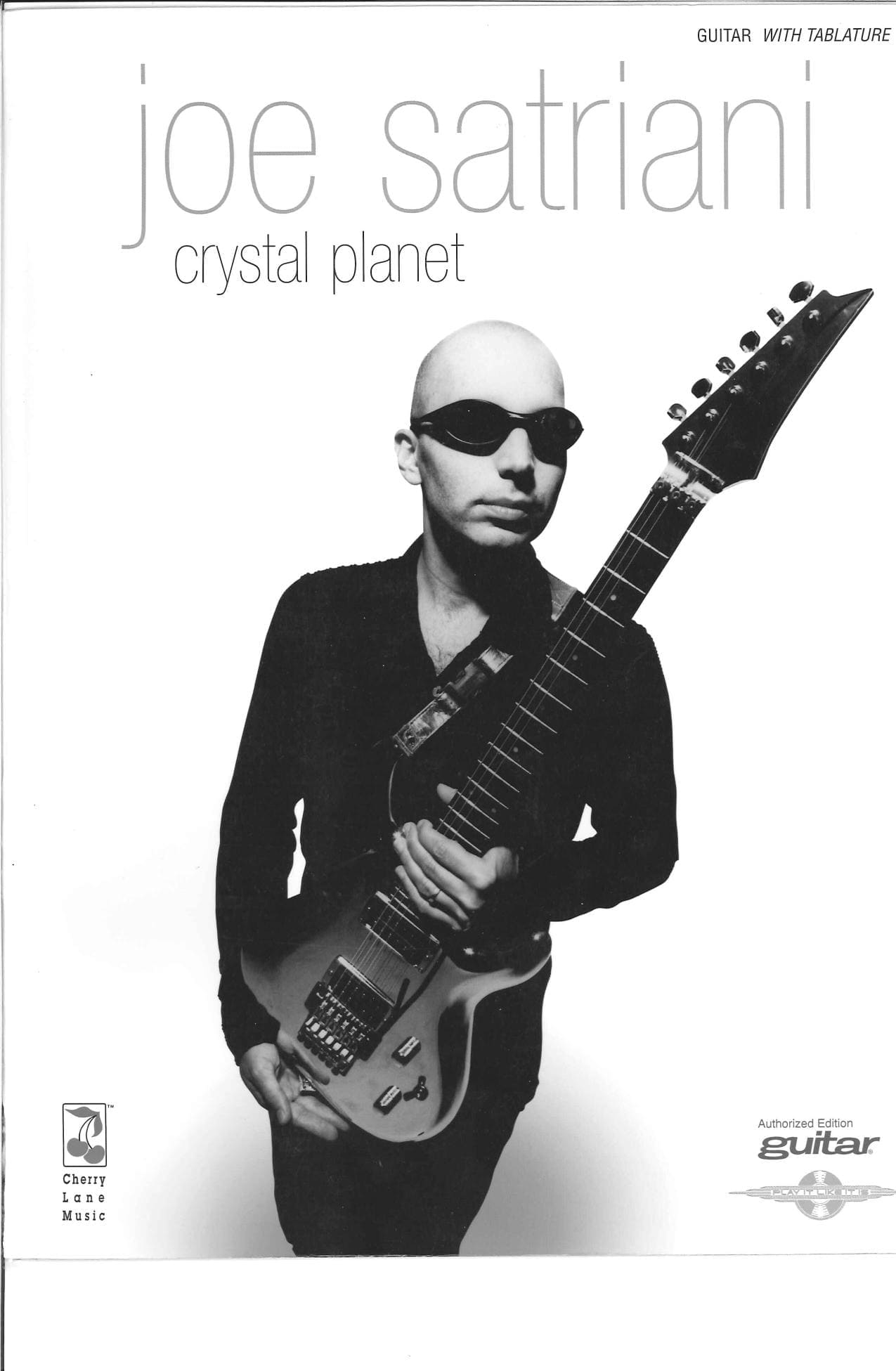
Other essential tracks include "Flying in a Blue Dream," a dreamy, atmospheric piece that showcases his use of harmonics and subtle bends to create a floating, emotional atmosphere; "Cool #9" from the 1995 self-titled album, a fan favorite with a memorable riff and a slinky groove; "Crystal Planet," from the 1998 album of the same name, which many consider his finest all-instrumental effort since Surfing; and "Starry Night," from Strange Beautiful Music (2002), which earned him a Grammy nomination.
Technique: The Science of Soul
Satriani's technique is a study in contradictions. He is capable of blistering speed, yet he rarely plays fast for its own sake. He is a master of every exotic rock technique, yet his playing is always in service of the song. As one analysis put it, where Eddie Van Halen is a "visceral, rough-cut diamond," Satriani is the "methodical, overachieving mad scientist" – schooled in music theory, thoroughly disciplined in technique, and a soloist of amazing scope.
His legato technique is perhaps his most distinctive physical skill. Satriani's playing is famously smooth, and legato is a key reason. In tracks like "Circles," fluid transitions between notes using hammer-ons and pull-offs give the riffs a seamless, vocal-like quality. He often plays three notes per string, picking each string only once and then sounding the next two notes with hammer-ons, a technique that requires precise control of the fretting hand. His vibrato is smooth, wide, and deeply expressive, breathing life into sustained notes and making them sing.
Satriani's picking technique is equally formidable. He is proficient in alternate picking, sweep picking, and economy picking, and he frequently mixes four-note-per-string runs with two- and three-note runs, creating a sense of rhythmic acceleration and deceleration within his phrases. He uses pentatonics sparingly, often dropping them in at the beginning or end of a run that otherwise involves something completely different – a technique that keeps his playing unpredictable and fresh.


One of his most innovative techniques is "swatting" the whammy bar with his right hand, instead of striking the strings in the normal way, to articulate the notes of a melody. This is not a gimmick but a precisely controlled technique that he uses to create unique articulations, as heard in "Surfing with the Alien". He also makes extensive use of harmonics – both natural and artificial – to add shimmering colours to his arrangements and to create the floating, emotional atmospheres that characterize many of his ballads.
Harmony: The Vertical and the Horizontal
Satriani's approach to harmony is one of his most distinctive musical signatures. His style is steeped in the blues and rock but draws from a wide range of genres and innovations, including modal harmony and exotic scales such as Arabian, Dorian, Mixolydian, and Phrygian. He studied with Lennie Tristano, whose technically demanding approach emphasized harmonic sophistication, and that training is evident throughout his work.
The most famous harmonic concept associated with Satriani is Pitch Axis Theory, a compositional technique he has used in numerous songs. Pitch Axis Theory involves constructing chord progressions around a central tonic or "pitch axis," with melodic scales chosen according to the chords that lie beneath them. In "Satch Boogie," for example, the central pitch is A, and the broken chords revolve around this note, allowing Satriani to move through different modes while maintaining a sense of tonal center.
Satriani's harmonic language is also characterized by his willingness to use simple, gutsy chords and to embrace repetition. He has described his approach as: "Let's try and remove excess harmony, don't be afraid of repetition, don't be afraid of simple chords that are really gutsy". This philosophy gives his music a direct, visceral quality that appeals to listeners who might be intimidated by more complex jazz fusion. Yet beneath the surface simplicity, there is often sophisticated harmonic movement – unexpected modulations, modal shifts, and chord voicings that reveal his deep understanding of music theory.
His use of harmonics – both as a compositional device and as an ornamental colour – is another harmonic signature. In "Rubina's Blue Sky Happiness," artificial and natural harmonics add shimmering colours to the arrangement, contributing to the floating, emotional atmosphere of the piece. These harmonics are not mere effects but integral parts of the harmonic texture, creating overtones that enrich the chordal foundation.
The Ibanez JS Series: A Guitar for Life
Satriani's relationship with Ibanez is one of the longest and most successful artist-endorsement partnerships in guitar history. Since 1987, when he first endorsed the Ibanez 540 Radius, he has worked with the Japanese manufacturer to develop the JS series, his signature line of guitars. Introduced in 1988, the first Joe Satriani signature model was the Ibanez JS1, a modified basswood version of the 540 Radius. It was loaded with DiMarzio pickups, a double-locking tremolo, and a unique push-pull high-pass filter built into the master volume knob – a feature that became a signature of the JS line.
The JS1 laid down the blueprint for all subsequent entries in the JS series, and many original shredders consider early JS1s to be the crème de la crème of Super Strats. The Ibanez JS1000, the longest-running model in the series, builds on the legacy of the original while offering a wider range of finishes. In recent years, Satriani has favoured the re-contoured design of the JS2400, which adds two frets to the guitar as well as a DiMarzio single coil in the neck and a Mo' Joe humbucker in the bridge position. On tour, he can be seen playing a modified variant called the JS2410, which features a unique Muscle Car Orange finish based on a 1973 Camaro – a guitar he uses prominently when playing with Chickenfoot.
Satriani has also equipped his signature JS guitars with a Sustainiac unit, which transforms the instrument into a "screamin' monster capable of unlimited sustain at the flip of a switch". The Ibanez Chromeboy is another notable variant, finished in a stunning chrome that has become a visual signature. For acoustic work, Satriani has a signature run of cutaway JSA10 and JSA20 acoustics with Ibanez, featuring Engelmann spruce tops, solid rosewood back and sides, and Fishman electronics.
While Ibanez is his primary instrument, Satriani also owns an incredible collection of vintage guitars, including a 1955 Les Paul Goldtop, multiple Gibson hollow bodies and double cut Les Pauls, and various vintage acoustics and Fender instruments. His amplifier of choice has long been Marshall, and he endorses the Marshall JVM410HJS, a signature model designed to his specifications.
Collaborations: Chickenfoot, G3, and Beyond
Satriani's collaborative career is as impressive as his solo work. In 1996, he founded the G3 tour concept, a collaborative platform bringing together virtuoso guitarists for shared performances rather than a fixed band. The inaugural North American leg featured Satriani alongside Steve Vai and Eric Johnson, performing individual sets followed by jam sessions on classics like "Born to Be Wild". Over the years, G3 iterations have included Yngwie Malmsteen, John Petrucci, Steve Lukather, Robert Fripp, Paul Gilbert, Steve Morse, and many others. The project culminated in a 2024 reunion tour with Vai and Johnson, resulting in the 2025 release of G3 Reunion Live.
In 2008, Satriani joined with former Van Halen frontman Sammy Hagar, former Van Halen bassist Michael Anthony, and Red Hot Chili Peppers drummer Chad Smith to form the supergroup Chickenfoot. Their self-titled debut album, released in 2009, entered the Billboard 200 at No. 4 and was certified gold. It featured hard rock tracks like "Oh Yeah," showcasing Satriani's riff-driven guitar work integrated into a full band dynamic. They followed with Chickenfoot III in 2011, which reached No. 2 on the Billboard 200. Satriani has described the experience of playing in a band as a "relief" compared to fronting his own instrumental music: "It can be a bit of a relief when you've got a born front person like Sammy Hagar or Ian Gillan, and you realize, Oh, I can just hang out back here near the drummer. It's kind of nice for a person like me, who's shy".
In recent years, Satriani has deepened his partnership with his former student Steve Vai through the SatchVai Band, announced in late 2024 as their first joint band after over 50 years of friendship. The lineup includes Kenny Aronoff on drums, Marco Mendoza on bass, and Pete Thorn on guitar, and they debuted with the single "The Sea of Emotion, Pt. 1" in March 2024.
Satriani also briefly toured with Deep Purple as lead guitarist in 1993, joining shortly after the departure of Ritchie Blackmore. He contributed guitar to tours with Mick Jagger in 1988, and has collaborated with orchestral composers, appeared on charity albums, and traded solos with artists like Lari Basilio.
Influences: A Guitarist's Guitarist
Satriani's influences are deeply rooted in the history of the electric guitar. His primary inspiration was Jimi Hendrix, whose death in 1970 directly led Satriani to dedicate his life to the instrument. He has cited Hendrix, Jimmy Page, and Jeff Beck as his masterful guitar greats, and his colourful compositions are steeped in the blues and rock while drawing from a wide range of genres and innovations. He has also acknowledged the influence of Eric Clapton, Billy Gibbons of ZZ Top, Queen's Brian May, jazz guitarist Wes Montgomery, and blues guitarists Robert Johnson and Chuck Berry.
His classical and jazz training – particularly his studies with Lennie Tristano – gave him a theoretical foundation that most rock guitarists lack. This combination of blues feeling, rock energy, and jazz sophistication is what makes Satriani's playing so distinctive. He can play a screaming rock solo one moment and a delicate, harmonically rich ballad the next, always with complete authority.
Legacy: The Teacher Who Became the Master
Joe Satriani's legacy is impossible to overstate. As a teacher, he directly shaped the playing of Steve Vai, Kirk Hammett, Alex Skolnick, and dozens of others, giving him a hand in some of the most important rock and metal music of the past four decades. As a solo artist, he proved that instrumental rock guitar could be commercially viable on a massive scale, selling over 10 million albums and earning 15 Grammy nominations – more than almost any other rock instrumentalist.
His influence extends far beyond his own recordings. The G3 tours he founded created a template for collaborative guitar events that continues to be imitated around the world. His signature Ibanez JS series has been in continuous production since 1988, making it one of the longest-running artist signature lines in the industry. His compositions – "Surfing with the Alien," "Always with Me, Always with You," "Summer Song," "Flying in a Blue Dream" – have become standards of the instrumental rock repertoire, studied and performed by guitarists of all ages.
Satriani has received numerous honours, including a 15-time Grammy nomination record, multiple platinum and gold albums, and a place in the pantheon of guitar heroes that includes Hendrix, Page, and Van Halen. Yet perhaps his greatest legacy is his commitment to the idea that technique must serve emotion. "I always want to transcend the technical aspects of the guitar to move people," he has said. In an era when shredding became an end in itself for many players, Satriani remained true to the song, the melody, and the feeling. He is, in the truest sense, the professor of shred – a teacher who never stopped learning, and a master who never stopped serving the music.
His most recent albums, including The Elephants of Mars (2022), Shapeshifting (2020), and What Happens Next (2018), demonstrate that his creative well remains deep. At an age when many of his contemporaries have long since retired or settled into nostalgia, Satriani continues to tour, record, and push the boundaries of what instrumental rock guitar can be. He remains, as he has been for nearly four decades, the gold standard against which all other instrumental rock guitarists are measured – a musician whose hands move with the precision of a surgeon and whose heart beats with the passion of a fan who never forgot why he picked up the guitar in the first place.
Discography
Main article on Wikipedia: Joe Satriani discography
- Not of This Earth (1986)
- Surfing with the Alien (1987)
- Flying in a Blue Dream (1989)
- The Extremist (1992)
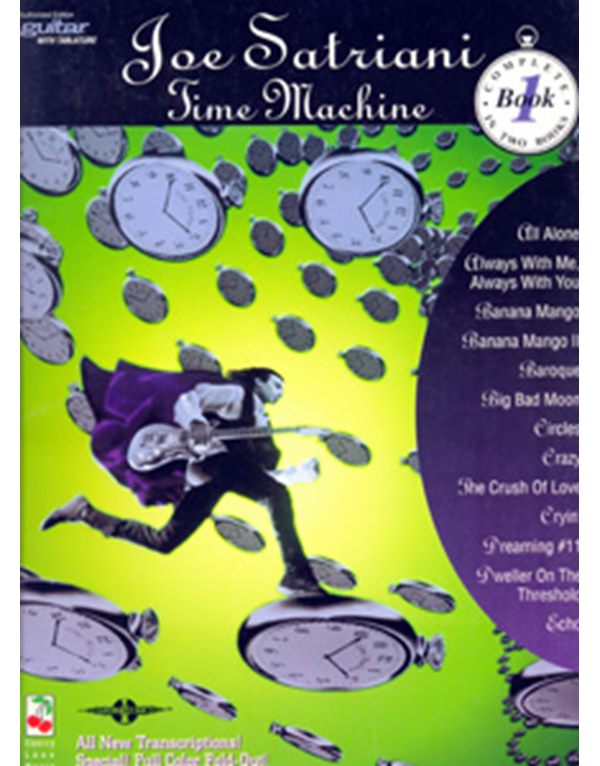
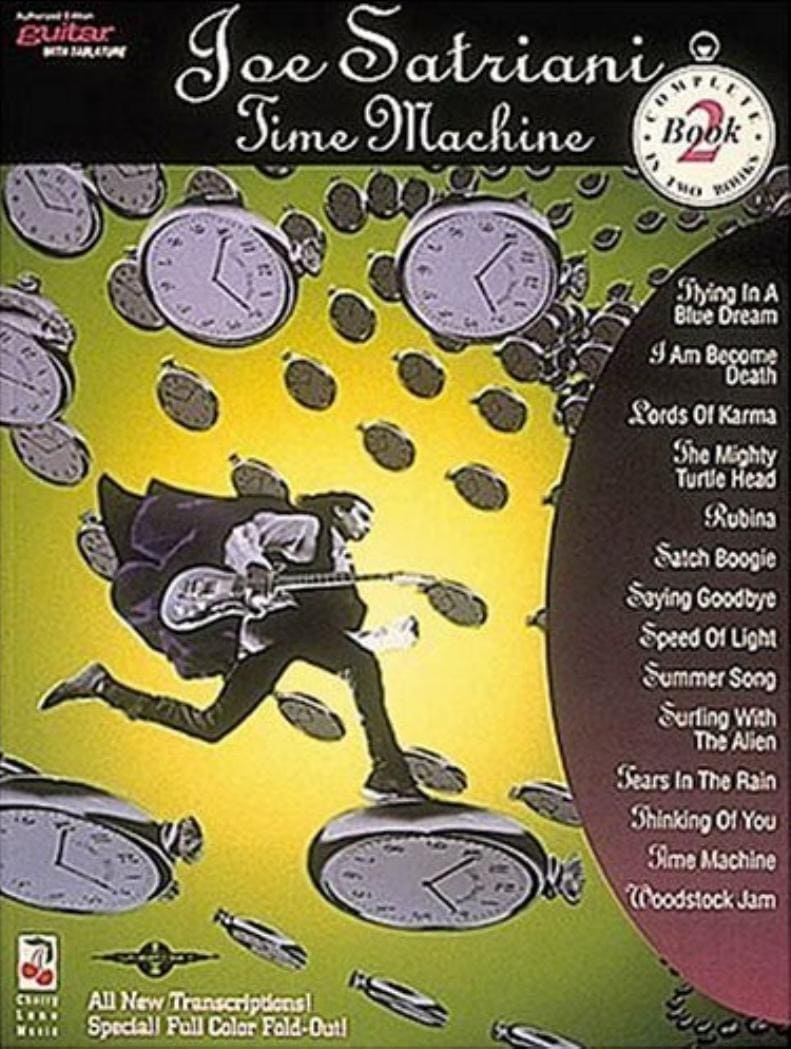
- Time Machine (1993)
- Joe Satriani (1995)
- Crystal Planet (1998)
- Engines of Creation (2000)
- Strange Beautiful Music (2002)
- Is There Love in Space? (2004)
- Super Colossal (2006)
- Professor Satchafunkilus and the Musterion of Rock (2008)
- Black Swans and Wormhole Wizards (2010)
- Unstoppable Momentum (2013)
- Shockwave Supernova (2015)
- What Happens Next (2018)
- Shapeshifting (2020)
- The Elephants of Mars (2022)
Browse in the Sheet Music Library:
Or browse in the categories menus & download the Library Catalog PDF:
Joe Satriani Greatest Hits Full Album
[00:03:19] - 1.Al̲̲wa̲y̲̲s̲ w̲̲i̲th̲̲ M̲e̲̲, A̲̲lw̲a̲y̲̲s̲̲ w̲̲it̲̲h Y̲̲ou [00:13:33] - 2.Made of̲ T̲̲ear̲̲s (̲L̲i̲̲ve)̲̲ [00:23:17] - 3.A̲l̲way̲s̲ with̲̲ Me̲̲,̲̲ A̲l̲̲w̲̲ays wit̲̲h Y̲̲o̲̲u - Li̲̲v̲̲e̲ Alb̲̲um V̲e̲rs̲̲i̲o̲n [00:31:08] - 4.F̲l̲̲y̲ing̲̲ in a B̲̲lu̲e Dream - Alb̲um V̲er̲̲s̲̲ion̲ (L̲iv̲e̲̲) [00:35:26] - 5.Sum̲̲m̲̲e̲r S̲ong̲ [00:41:58] - 6.I̲f̲̲ I̲̲ C̲ou̲̲ld Fly [00:46:25] - 7.S̲u̲r̲fing̲̲ wi̲̲t̲h̲̲ the A̲l̲i̲̲e̲n̲̲ [00:51:11] - 8.Sah̲ar̲a̲