Table of Contents
Scores for all instruments: 16,000+ (active and growing), over 236,000 pages.
All genres and levels: Jazz & Blues, Rock & Pop, Classical & Contemporary, Film & Musicals;
books & biographies; methods, études, play-along tracks (MP3) for Jazz & Rock.
Access & benefits: US$15.99 one-time payment, valid for lifetime, full Library access.
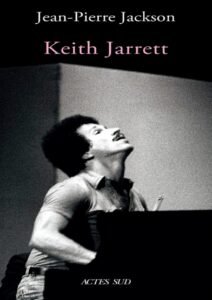
Happy birthday, Keith Jarrett, born on this day in 1945
Keith Jarrett: The Genius of Improvisation and Jazz Innovation
Keith Jarrett is one of the most influential and innovative pianists in the history of jazz and contemporary music. Known for his virtuosic technique, profound improvisational skills, and genre-defying compositions, Jarrett has left an indelible mark on the world of music. From his early days as a prodigy to his groundbreaking solo piano performances and collaborations with jazz legends, Jarrett's career spans over five decades, earning him critical acclaim and a devoted global following.
This article explores Keith Jarrett’s biography, musical style, harmonic and melodic approaches, influences, legacy, major works, filmography, discography, and links to documentaries and performances of his most famous compositions.
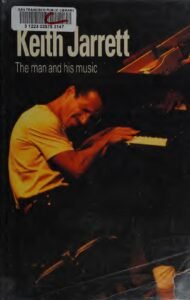
The best sheet music download from our Library.
Keith Jarrett Biography
Early Life and Musical Beginnings
Keith Jarrett was born on May 8, 1945, in Allentown, Pennsylvania. A child prodigy, he began playing piano at the age of three and gave his first public recital at seven, performing works by Mozart, Bach, and Beethoven. His early exposure to classical music deeply influenced his later improvisational style, which often blends jazz with classical forms.
By his teenage years, Jarrett was already an accomplished musician, studying at the Berklee College of Music before moving to New York City in the mid-1960s. There, he quickly gained recognition as a versatile pianist, capable of playing both avant-garde jazz and traditional forms.
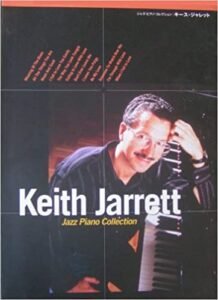
Please, subscribe to our Sheet Music Library.
Rise to Fame: The Charles Lloyd Quartet and Miles Davis
Jarrett’s first major breakthrough came when he joined saxophonist Charles Lloyd’s quartet in 1966. The group’s blend of jazz, rock, and world music attracted a wide audience, and their album "Forest Flower" (1966) became a surprise commercial success.
In 1969, Jarrett was invited to join Miles Davis’ electric band, contributing to landmark albums like "Bitches Brew" (1970) and "Live-Evil (1971)". Though Jarrett was initially hesitant about Davis’ fusion direction (preferring acoustic jazz), this experience expanded his musical vocabulary, incorporating electric keyboards and experimental textures.
The American Quartet and European Quartet
After leaving Davis’ band, Jarrett formed his "American Quartet" (with Dewey Redman, Charlie Haden, and Paul Motian), which explored free jazz, post-bop, and folk influences. Albums like "The Survivors’ Suite" (1977) showcase the group’s deep interplay and Jarrett’s evolving compositional style.
Simultaneously, he led his "European Quartet" (with Jan Garbarek, Palle Danielsson, and Jon Christensen), which had a more lyrical, ECM Records-style sound, as heard in "Belonging" (1974) and "My Song" (1978).
Solo Piano and The Köln Concert
Jarrett’s most legendary contribution to music is his solo piano improvisations. His 1975 performance in Cologne, Germany, released as "The Köln Concert", became one of the best-selling solo jazz albums of all time. Entirely improvised, the concert demonstrated his ability to weave spontaneous melodies, rhythmic complexity, and emotional depth into a cohesive masterpiece.
Later Career and Health Challenges
In the 1980s and 1990s, Jarrett continued to record solo and with his "Standards Trio" (featuring Gary Peacock and Jack DeJohnette), reinterpreting jazz standards with unparalleled creativity. However, in the late 1990s, he was diagnosed with chronic fatigue syndrome (CFS), which forced him to take breaks from performing. Despite this, he made a triumphant return in the 2000s with new solo and trio recordings.
In 2018, Jarrett suffered two strokes that impaired his motor skills, effectively ending his performing career. However, his vast body of work remains a testament to his genius.
Musical Style and Innovations
Improvisation as Composition
Jarrett’s approach to improvisation is unique—he treats each performance as a spontaneous composition, drawing from jazz, classical, blues, folk, and world music. Unlike many jazz musicians who rely on pre-established chord changes, Jarrett often begins with a simple motif and develops it into a sprawling, multi-movement piece.
Harmonic and Melodic Language
- Modal and Tonal Exploration: Jarrett frequently shifts between modal jazz harmony (influenced by Miles Davis and John Coltrane) and tonal classical structures (like those of Bach and Bartók).
- Ostinatos and Repetition: He uses repetitive left-hand patterns (ostinatos) to create a hypnotic foundation for right-hand improvisations (e.g., "Part II" of The Köln Concert).
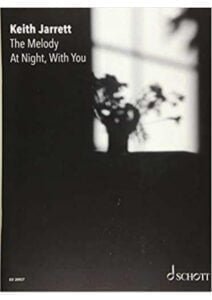
- Blues and Gospel Inflections: His playing frequently incorporates bluesy bends, gospel-like harmonies, and soulful phrasing (evident in "The Melody at Night, With You").
Rhythmic Complexity

Jarrett’s rhythmic sense is highly sophisticated, blending:
- Swing and bebop phrasing (in trio settings)
- Free, rubato passages (in solo concerts)
- Odd-meter explorations (e.g., "Spiral Dance" from "Hymns/Spheres")

Influences
Jarrett’s style is a synthesis of diverse influences:
- Jazz: Bill Evans, Art Tatum, McCoy Tyner, Ornette Coleman
- Classical: Johann Sebastian Bach, Béla Bartók, Dmitri Shostakovich
- Blues & Gospel: Ray Charles, church music from his childhood
- World Music: African rhythms, Indian ragas
Legacy
Keith Jarrett’s impact on music is immeasurable:
- Redefined solo piano improvisation, inspiring generations of musicians.
- Bridged jazz and classical in a way few others have.
- Elevated the "Standards Trio" to new heights of interplay and sensitivity.
- Pushed the boundaries of jazz, proving that spontaneity can yield profound compositions.

Major Works and Discography
Key Albums
- "The Köln Concert" (1975) – Solo piano masterpiece.
- "Facing You" (1971) – First solo studio album.
- "Belonging" (1974) – With the European Quartet.
- "Standards, Vol. 1" (1983) – First album with the Standards Trio.
- "The Melody at Night, With You" (1999) – Intimate solo recordings during his illness.
Filmography & Documentaries
- "Keith Jarrett: The Art of Improvisation" (2005) – A deep dive into his creative process.
- "Trio Live" (2007) – Performances with Peacock and DeJohnette.
Links to Documentaries and Performances
- The Köln Concert (Complete)
- "My Song" (Live Keith Jarrett · Jan Garbarek · Palle Danielsson · Jon Christensen)
- "The Art of Improvisation" Documentary
- Keith Jarrett – The Art of Improvisation. Exclusive Interviews
Keith Jarrett remains one of the most extraordinary musicians of our time. His ability to blend spontaneity with structure, jazz with classical, and emotion with intellect makes his work timeless. Though his performing days are over, his recordings continue to inspire, ensuring that his legacy endures for generations to come.
Browse in the Sheet Music Library:
Or browse in the categories menus & download the Library Catalog PDF:
Keith Jarret's Solo piano

Jarrett recorded a few solo pieces live under the guidance of Miles Davis at the Cellar Door in Washington, D.C., in December 1970. These were done on electric pianos (Rhodes and Contempo). Most parts of these recorded sets were released in 2007 on The Cellar Door Sessions, featuring four improvisations by Jarrett.
Jarrett's first album for ECM, Facing You, was released in 1971. He has continued to record solo studio piano albums intermittently throughout his career, including Staircase (1976), Invocations / The Moth and the Flame (1981), and The Melody at Night, with You (1999). Book of Ways (1986) is a studio recording of clavichord solos.
In 1973, Jarrett began playing totally improvised solo concerts, and it is the popularity of these concert recordings that made him one of the best-selling jazz artists in history. Albums released from these concerts were Solo Concerts: Bremen/Lausanne (1973), which Time magazine named "Jazz Album of the Year", The Köln Concert (1975), which became the best-selling piano recording in history, and Sun Bear Concerts (1976), a 10-LP (and later 6-CD) box set. Another of Jarrett's solo concerts, Dark Intervals, was released in 1987.
After a hiatus, Jarrett returned to extended solo improvised concert format with Paris Concert (1990), Vienna Concert (1991), Live at the Royal Festival Hall (1991), and La Scala (1995). These later concerts tended to be more influenced by classical music than the earlier ones, reflecting his interest in composers such as Bach and Shostakovich. In the liner notes to Vienna Concert, Jarrett named the performance his greatest achievement and the fulfillment of everything he was aiming to accomplish; "I have courted the fire for a very long time, and many sparks have flown in the past, but the music on this recording speaks, finally, the language of the flame itself", he wrote.
Jarrett has commented that his best performances have been when he has had only the slightest notion of what he was going to play at the next moment. He also said that most people don't know "what he does" which relates to what Miles Davis said to him expressing bewilderment as to how Jarrett could "play from nothing".
Jarrett's 100th solo performance in Japan was captured on video at Suntory Hall, Tokyo, in April 1987, and released the same year as Solo Tribute. This is a set of almost all standard songs. Another video recording, Last Solo, was released in 1987 from a solo concert at Kan-i Hoken Hall in Tokyo in January 1984.
In the late 1990s, Jarrett was diagnosed with chronic fatigue syndrome and was unable to leave his home for long periods of time. During this period, he recorded The Melody at Night, with You, a solo piano effort consisting of jazz standards. The album had originally been a Christmas gift to his second wife, Rose Anne.
By 2000, Jarrett had returned to touring, both solo and with the Standards Trio. Two 2002 solo concerts in Japan, Jarrett's first solo piano concerts following his illness, were released on the 2005 CD Radiance (a complete concert in Osaka and excerpts from one in Tokyo) and the 2006 DVD Tokyo Solo (the entire Tokyo performance). In contrast with previous concerts (which were generally a pair of continuous improvisations 30–40 minutes long), the 2002 concerts consist of a linked series of shorter improvisations (some as short as a minute and a half).
In September 2005, at Carnegie Hall, Jarrett performed his first solo concert in North America in more than ten years, released a year later as a double-CD set, The Carnegie Hall Concert. In late 2008, he performed solo at the Salle Pleyel in Paris and at London's Royal Festival Hall, marking the first time Jarrett played solo in London in 17 years. Recordings of these concerts were released in October 2009 on the album Paris / London: Testament. The 2005 documentary The Art of Improvisation, broadcast on BBC Two on November 12, 2021, concluded with his trio performing a recognizable version of "Basin Street Blues".