Scores for all instruments: 16,000+ (active and growing), over 236,000 pages.
All genres and levels: Jazz & Blues, Rock & Pop, Classical & Contemporary, Film & Musicals;
books & biographies; methods, études, play-along tracks (MP3) for Jazz & Rock.
Access & benefits: US$15.99 one-time payment, valid for lifetime, full Library access.
Table of Contents

The best sheet music download from our Library.

Please, subscribe to our Sheet Music Library. Sheet music should be accessible and affordable for all musicians, from professionals to absolute beginners.
Nirvana: The Loud-Soft-Loud Revolution
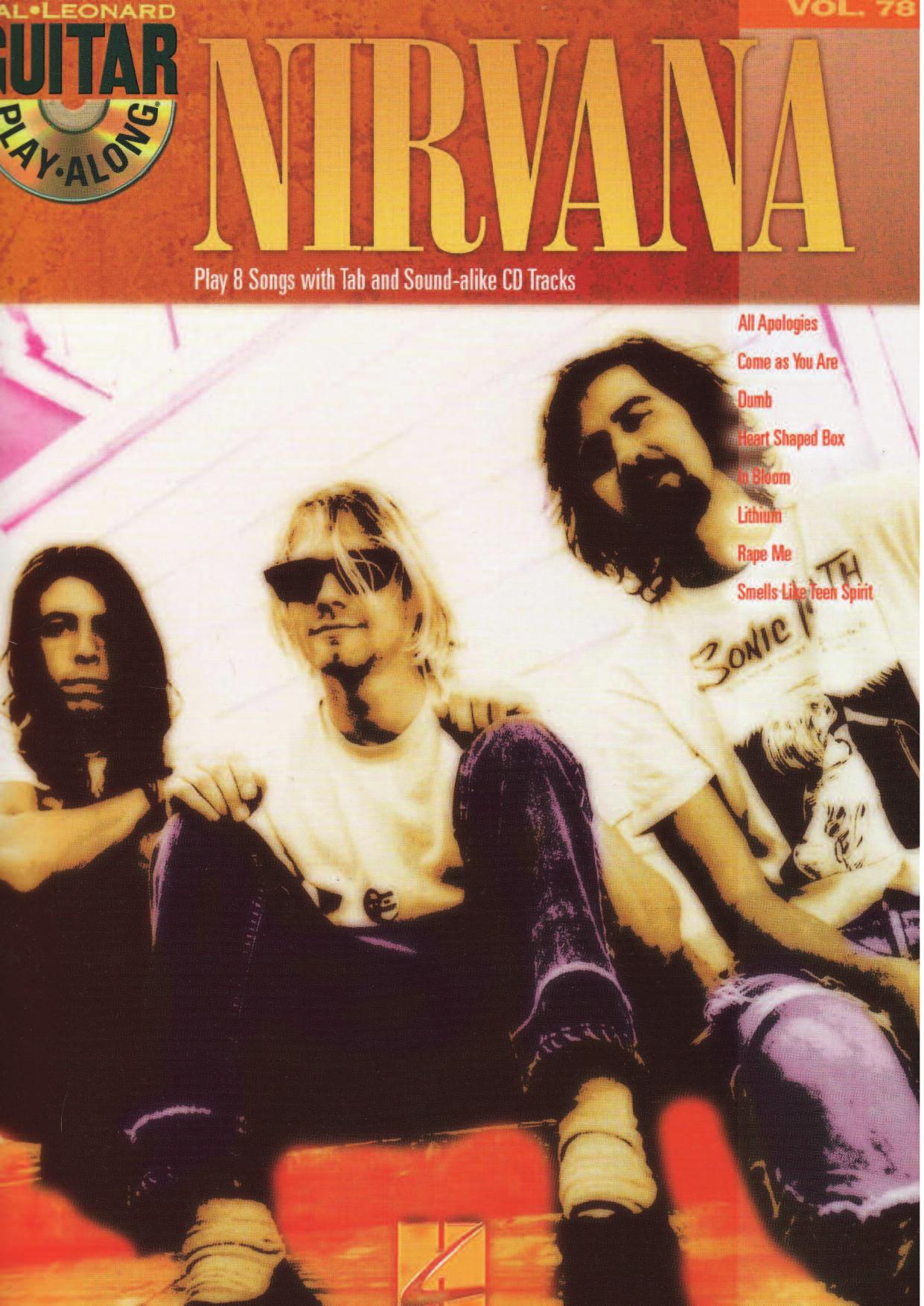
Nirvana remains one of the most consequential bands in the history of popular music. Active for less than a decade and responsible for just three studio albums, the trio from Aberdeen, Washington, did nothing less than redraw the boundaries of mainstream rock at the dawn of the 1990s. Combining the ferocity of punk, the weight of heavy metal, and an unexpected gift for pop melody, Nirvana became the reluctant figureheads of grunge and gave voice to a generation of young people who felt alienated from the slick, hedonistic rock culture that had preceded them. More than thirty years after the death of frontman Kurt Cobain, their music continues to be discovered, debated, and revered, and their influence has spread far beyond the confines of alternative rock into hip-hop, jazz, pop, and fashion.
Search your favorite sheet music in the Sheet Music Library Catalog

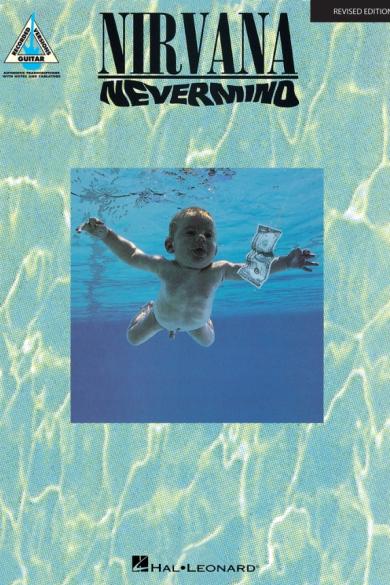

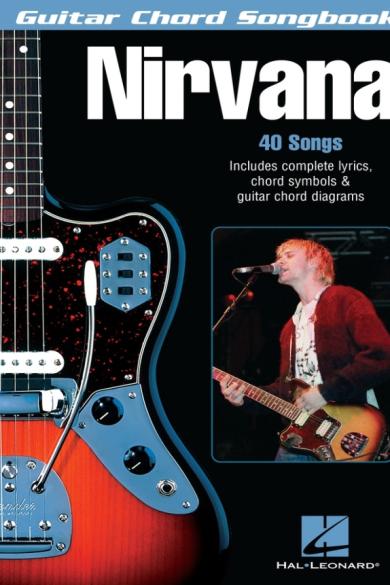
Nirvana - Smells Like Teen Spirit
Formation and Biography
Nirvana was formed in 1987 by vocalist and guitarist Kurt Cobain and bassist Krist Novoselic, two friends from the logging town of Aberdeen, Washington. Cobain was born on February 20, 1967, and Novoselic on May 16, 1965, in Compton, California, before his family relocated to the Pacific Northwest. The pair cycled through a succession of drummers during the band's early years, a period documented in John D. Luerssen's Nirvana FAQ, which notes that the group had a "rocky start" before achieving stability. Their first single, a cover of Shocking Blue's "Love Buzz," arrived in 1988, and their debut album, Bleach, was released in 1989 on the influential Seattle independent label Sub Pop. Recorded for a famously modest sum—often cited as $606.17—Bleach was rooted in Cobain's heavy, repetitive riffing and combined dirge-like punk with a palpable sense of teenage nihilism.
The band's fortunes changed decisively with the arrival of drummer Dave Grohl, born January 14, 1969, in Warren, Ohio. Grohl joined in 1990 as the group's sixth drummer, bringing a powerful, precise, and propulsive style that would become a defining element of Nirvana's sound. Producer Butch Vig later credited Grohl's drumming for "90 percent" of the Nevermind sound, and the album was recorded in a brisk sixteen days at Sound City Studios in Van Nuys, California. Released on September 24, 1991, through Geffen Records subsidiary DGC, Nevermind was expected to sell perhaps 200,000 copies; instead, it went platinum by November, topped the Billboard 200 in early 1992, and famously dethroned Michael Jackson's Dangerous from the top of the chart. The album has since sold over 30 million copies worldwide. Its lead single, "Smells Like Teen Spirit," became an anthem for Generation X and a seismic event in popular culture.
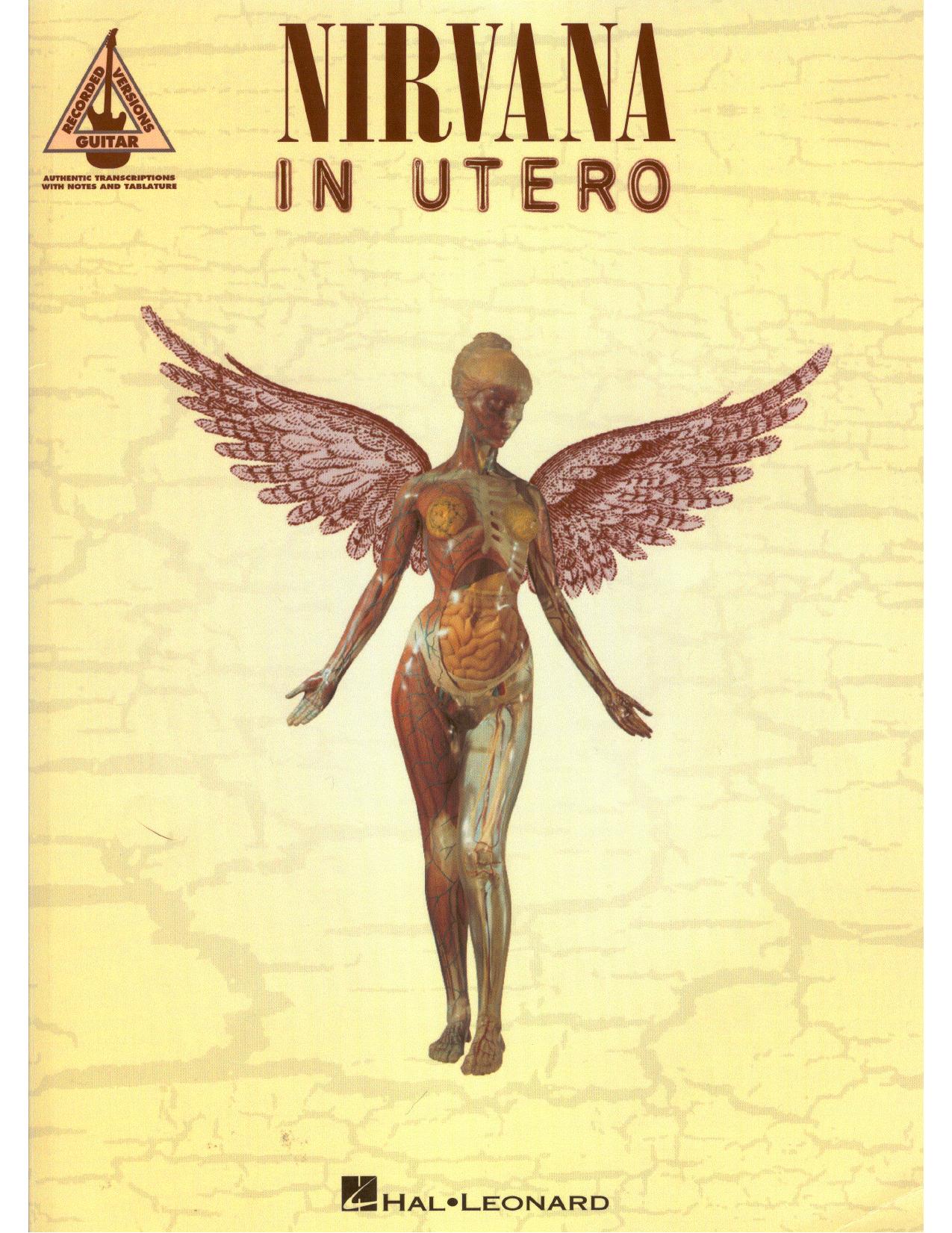
Nirvana's third and final studio album, In Utero, was released on September 21, 1993. Seeking a rawer, more abrasive sound than the polished Nevermind, the band hired Steve Albini, the engineer and musician known for his work with Pixies and PJ Harvey. Recorded and mixed over roughly two weeks in February 1993 at Pachyderm Recording Studio in Cannon Falls, Minnesota, In Utero was a deliberate rejection of mainstream expectations, though it still debuted at number one in the United States and sold 15 million copies worldwide. The album's commercial success was accompanied by growing personal turmoil. Cobain's health, his marriage to Courtney Love, and his struggles with addiction were subjected to relentless media scrutiny, and the band's abhorrence of celebrity became a defining tension of their final years. On April 5, 1994, Kurt Cobain died by suicide at his home in Seattle, effectively ending Nirvana.

Musical Style and Harmony
Nirvana's music is frequently described as grunge, a label that the band members themselves often resisted. Grunge, as it crystallized in the late 1980s Seattle scene, was a "cocktail of punk and heavy metal" with a deliberately unkempt image, and it reflected the disillusionment of a generation. Nirvana's particular contribution was to refine this mixture by folding in a strong current of 1960s-style pop melody, creating a sound that was at once accessible and abrasive. The historian of the genre notes that Nirvana's sound was "equal parts Black Sabbath... and Cheap Trick," while their aesthetics remained strictly indie rock. The band's most recognizable structural signature is the so-called "loud-soft-loud" dynamic: a quiet, tuneful verse that switches into a ferocious, distorted chorus. This approach was directly inspired by the Pixies, with Cobain himself admitting that he "was basically trying to rip off the Pixies".
The true radicalism of Nirvana's music, however, lies in its harmonic language. As a composer writing for Stereogum observed, the most revolutionary facet of Nevermind is its "almost complete abandonment of principles of functional harmony"—the system of chord relationships and resolutions that had underpinned essentially all Western popular music before it. In functional harmony, chords have predefined roles and tend to move from tension toward resolution. Cobain, by contrast, constructed sequences that moved by major or minor third intervals in ways that defied predictable behavior, creating coherence without relying on established conventions. The Routledge Handbook of Music Theory explains that Nirvana's progressions are often based on "the juxtaposition of power-chords or (major/minor) triadic chords whose roots... are elements of the modal scale-set which informs the melody," a practice that can be described as "non-functional diatonicism". It is therefore often misleading to describe Nirvana songs as being "in a key" in any conventional sense.
This harmonic approach is audible across their catalogue. "Smells Like Teen Spirit," often lazily described as being in F minor, is more accurately understood as built on power chords derived from the first, fourth, third, and sixth steps of the F Aeolian mode—a pattern of F5–B♭5–A♭5–D♭5 that never presents a conventional dominant chord. "In Bloom" is a showcase of non-functional harmonic structures, with Cobain's chord choices creating meaning through juxtaposition rather than resolution. "Pennyroyal Tea" alternates Am and G in its truncated verse (a simple i–VII in A Aeolian) before moving through a chorus built on C, D, and B♭ power chords. "Come As You Are" revolves around a cyclic, almost hypnotic progression of basic minor chords—F♯m, A, E, and D—that serves the song's moody atmosphere rather than a narrative of tension and release. "Lithium," meanwhile, cycles through E5, A5, and C5 in the verses and E5, G♯5, C♯5, and A5 in the chorus, a pattern that feels both simple and strangely unsettled. Cobain's guitar technique itself contributed to this effect: he often shifted the same hand shape vertically or horizontally on the fretboard, producing chord patterns related by unconventional intervals almost by physical necessity.


Influences
Kurt Cobain was an omnivorous listener, and Nirvana's music reflects a wide and sometimes surprising range of sources. The most frequently cited musical influence is the Pixies, whose quiet-loud dynamics provided the template for Nirvana's most famous songs. The Melvins, fellow Washington underground rockers, were crucial in transmitting the weight and sludgy riffing of Black Sabbath to Cobain's generation; Cobain even auditioned for the Melvins at one point, though he was too nervous to remember the songs. Black Sabbath themselves were a foundational influence, particularly on Bleach, and Cobain described Nirvana's early sound as "Black Sabbath playing The Knack". Classic rock bands such as Led Zeppelin, Aerosmith, AC/DC, and Kiss also left their mark, as did the Beatles, whose sense of melody and non-functional harmonic approach Cobain explicitly admired. The punk and hardcore tradition was equally vital: Black Flag, the Sex Pistols, the Clash, Bad Brains, and the Wipers all informed Nirvana's intensity and ethical stance. Cobain's record collection also included the Vaselines (whose songs Nirvana covered), Leadbelly (whose "Where Did You Sleep Last Night" became a centerpiece of the MTV Unplugged performance), Daniel Johnston, the Meat Puppets, and the Butthole Surfers. This eclectic set of influences helps explain why Nirvana never fit comfortably into any single genre box: they were a punk band with pop instincts, a metal band with indie ethics, and a mainstream phenomenon that despised the mainstream.
Relationships with Other Artists
Nirvana's relationships with their peers and predecessors were often as complicated as their music. The most notorious public conflict was with Guns N' Roses, whose frontman Axl Rose was, paradoxically, an early admirer of Nevermind. Rose invited Nirvana to open for Guns N' Roses and Metallica on a co-headlining stadium tour in 1992, but Cobain refused, telling Metallica guitarist Kirk Hammett that he "just didn't like what Guns N' Roses stood for". Cobain had publicly dismissed Guns N' Roses as "the typical Guns N' Roses type of band that has absolutely nothing to say," and the feud escalated at the 1992 MTV Video Music Awards, where a backstage encounter between Cobain, Courtney Love, and Rose turned hostile. Cobain later described Rose in harsh terms, and the animosity became a symbol of the generational divide between the hair-metal old guard and the alternative-rock new wave.
By contrast, Nirvana's relationship with Sonic Youth was one of mutual respect and practical support. Sonic Youth were instrumental in helping Nirvana secure their deal with Geffen, and the two bands shared a commitment to the independent, experimental spirit of the American underground. This connection placed Nirvana within a broader network of alternative and noise-rock artists, including Dinosaur Jr., Babes in Toyland, and Gumball, all of whom toured together and appeared in the documentary 1991: The Year Punk Broke. Nirvana's collaborative spirit extended to their live performances: for the MTV Unplugged session, they were joined by cellist Lori Goldston and guitarist Pat Smear, and they brought out the Meat Puppets to perform three of their songs. The band's working relationships with producers were also formative. Butch Vig, who produced Nevermind, recalled the sessions as a period of intense creative energy, while Steve Albini, who engineered In Utero, was chosen precisely because his raw, uncompromising aesthetic aligned with the band's desire to escape the polish of their breakthrough record.
Discography
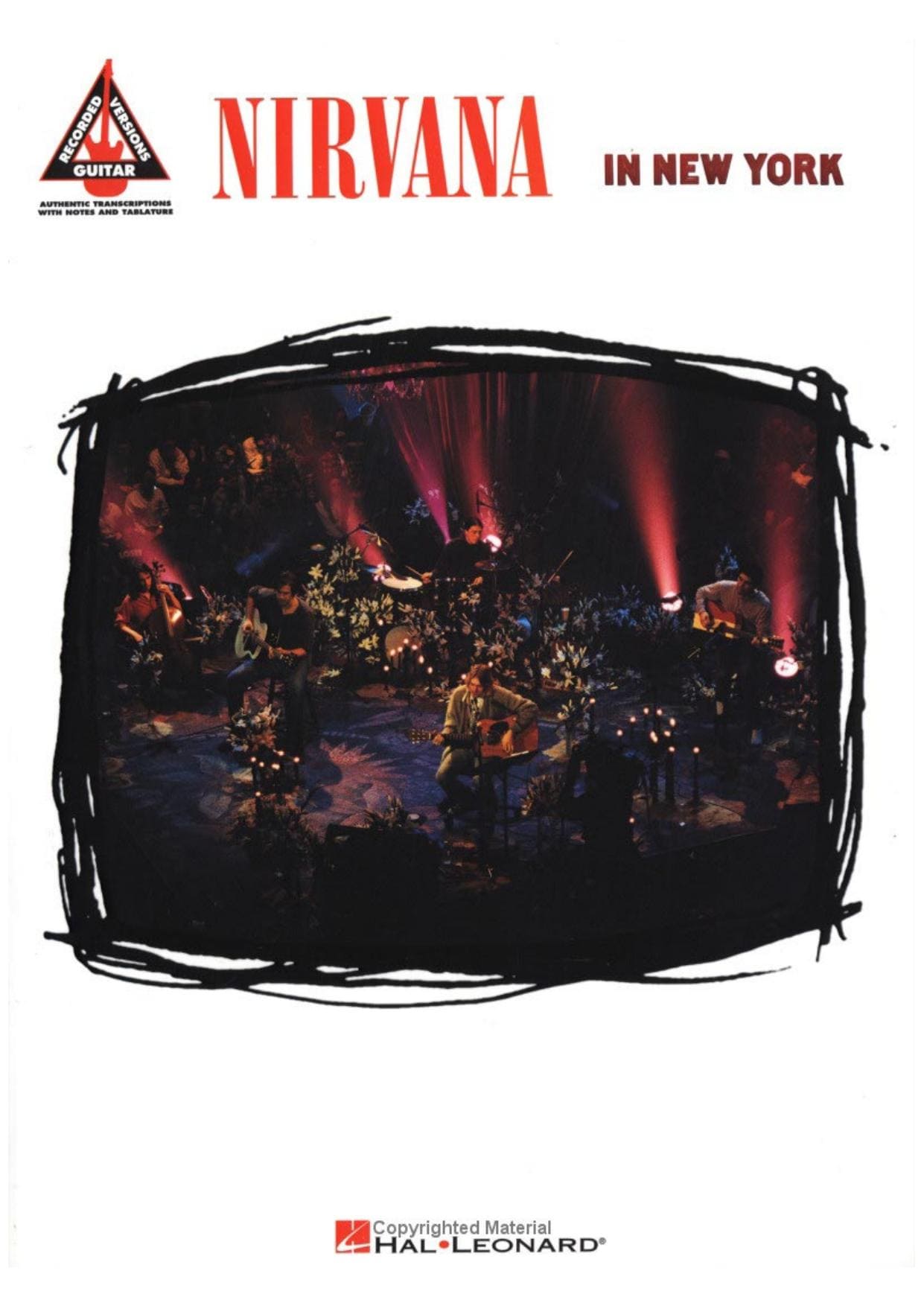
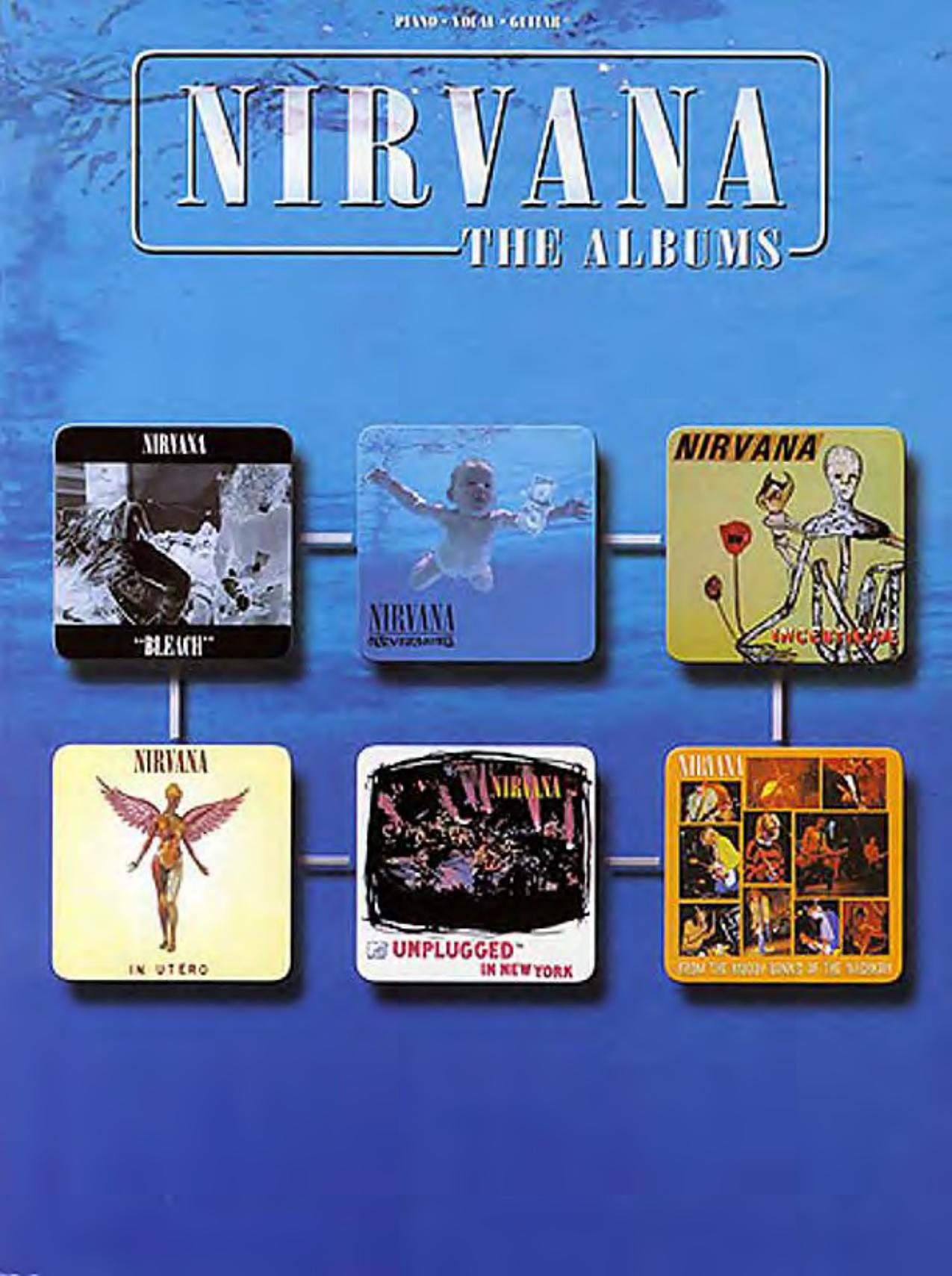
Nirvana's official discography is compact but remarkably influential. It consists of three studio albums, twenty-one singles, five live albums, two extended plays, four compilation albums, and three box sets. The studio albums are Bleach (Sub Pop, June 15, 1989), Nevermind (DGC, September 24, 1991), and In Utero (DGC, September 21, 1993). Bleach sold approximately 1.9 million copies in the United States and reached number 89 on the Billboard 200, while Nevermind has been certified 13-times platinum by the RIAA and has sold over 30 million copies worldwide. In Utero debuted at number one in the United States and several other countries, was certified six-times platinum, and has sold roughly 15 million copies globally. The band has sold 27.6 million albums in the United States alone and over 75 million records worldwide. Among the posthumous releases, the live album MTV Unplugged in New York (1994) won a Grammy and topped the charts, while the compilation Nirvana (2002) and the box set With the Lights Out (2004) further documented the band's creative breadth.
Most Known Compositions and Performances
Discography
Main articles: Nirvana discography and list of songs
Further information: Nirvana bootleg recordings
Certain Nirvana songs have become permanent fixtures of the rock canon. "Smells Like Teen Spirit," the opening track and lead single from Nevermind, is the band's defining statement: a four-chord anthem built on a riff that borrows its rhythmic propulsion from new-wave pop and its harmonic ambiguity from modal scales, over which Cobain delivers a lyric of generational disaffection that remains deliberately opaque. "Come As You Are" showcases the band's softer, more hypnotic side, its watery guitar chorus effect and cyclic chord progression creating a sense of uneasy invitation. "Lithium" alternates between quiet, brooding verses and a chorus of desperate affirmation, its power-chord patterns illustrating Cobain's gift for making simple materials feel emotionally complex. "In Bloom" is a masterclass in non-functional harmony disguised as a pop song, while "Heart-Shaped Box," the lead single from In Utero, pairs a queasy, descending chord pattern with some of Cobain's most surreal and visceral imagery. "All Apologies," debuted live at the 1992 Reading Festival before its studio release, is perhaps Cobain's most moving ballad, fusing Beatles-esque melody with a stark, confessional honesty. Earlier songs such as "About a Girl" and "Polly" demonstrated that the band's melodic instincts were present from the beginning, even amid the heaviness of Bleach and the caustic volume of their live shows.
Nirvana's live performances were often as important as their recordings. The band's headlining set at the Reading Festival on August 30, 1992, is widely regarded as one of the greatest festival performances of all time. Cobain entered the stage in a wheelchair, wearing a hospital gown and wig, a theatrical gesture that simultaneously mocked the rumors surrounding his health and underscored his contempt for the expectations of fame. What followed was a ferocious, uncompromising set that avoided greatest-hits pandering in favor of deeper cuts, B-sides, and covers, culminating in an early, stripped-down performance of "All Apologies" dedicated to Courtney Love and the couple's newborn daughter, Frances Bean. The MTV Unplugged session, recorded on November 18, 1993, at Sony Music Studios in New York, is another landmark. In a single take, the band performed fourteen songs, reimagining their own material and covering artists such as Leadbelly and the Meat Puppets. Cobain, despite his deteriorating health, delivered a mesmerizing performance that revealed the melodic and emotional core beneath the band's noisy exterior. Other notable documents include the Halloween 1991 performance at the Paramount Theatre in Seattle and the Live and Loud concert from December 1993, both of which capture the band at the height of their performing powers.
Film and Documentary Works
Nirvana's visual legacy is extensive and continues to shape public understanding of the band. The band appeared in 1991: The Year Punk Broke, a documentary tour film directed by Dave Markey that captured Nirvana alongside Sonic Youth, Dinosaur Jr., Babes in Toyland, and the Ramones during a European tour. The film is an invaluable record of the moment when American underground rock was on the cusp of mainstream breakthrough. The band's own video release, Live! Tonight! Sold Out!! (1994), compiled live performances, studio footage, and interviews, offering a chaotic and characteristically irreverent portrait of the group. The MTV Unplugged in New York performance was released as a live album and video and has become one of the most celebrated documents of the band's artistry.
Documentaries about Kurt Cobain and Nirvana have proliferated since the 1990s. Kurt & Courtney (1998), directed by Nick Broomfield, examined Cobain's life and relationship with Courtney Love and was controversial for its conspiratorial tone. Kurt Cobain: About a Son (2006), directed by AJ Schnack, used intimate audio interviews with Cobain, conducted by journalist Michael Azerrad, over footage of the Washington state locations that shaped him. Kurt Cobain: Montage of Heck (2015), directed by Brett Morgen and produced with the cooperation of Cobain's family, combined home movies, animations, and previously unheard audio to create an authorized and deeply personal portrait. Soaked in Bleach (2015) revisited the circumstances of Cobain's death from a skeptical perspective, while Hype! (1996) documented the rise and commercialization of the Seattle grunge scene. The documentary When Nirvana Came to Britain (2025) explored the band's relationship with the UK between 1989 and 1994, featuring unseen archive and home-movie footage. These films, taken together, have ensured that Nirvana's story is not only heard but seen, and that the visual iconography of the band—Cobain's cardigan, the smoky stage, the wheelchair at Reading—remains as potent as the music itself.
Legacy
Main article: List of awards and nominations received by Nirvana
The legacy of Nirvana is difficult to overstate. Within a span of less than a decade and with only three studio albums, the band "made themselves synonymous with what came to be known as grunge" and provided "a haven for those feeling lost and abject". Their breakthrough with Nevermind did not merely popularize a regional sound; it fundamentally altered the music industry's model of success, demonstrating that a band from the independent underground could outsell the biggest pop stars in the world without compromising its aesthetic or its values. Nirvana opened the doors for a wave of alternative acts—Pearl Jam, Alice in Chains, Soundgarden, and countless others—to become household names, and the "Year Punk Broke" became a shorthand for a cultural shift that extended into fashion, art, and activism. The band was inducted into the Rock and Roll Hall of Fame in 2014, in its first year of eligibility, with R.E.M.'s Michael Stipe delivering the induction speech and surviving members Dave Grohl and Krist Novoselic joined by a roster of female vocalists—including Joan Jett, Kim Gordon, St. Vincent, and Lorde—for a celebratory performance of Nirvana songs.
More remarkably, Nirvana's influence has proven durable and genre-defiant. In the decades since Cobain's death, their music has been embraced by hip-hop artists (Jay-Z interpolated "Smells Like Teen Spirit" in his 2013 song "Holy Grail"), jazz musicians (pianist Robert Glasper covered the same song alongside John Coltrane), and pop and country performers, all of whom have found in Cobain's songs a raw emotional authenticity that transcends style. As the writer Michael Azerrad has observed, Nirvana continues to feel relevant because their music is "passionate and genuine," and that quality has allowed their influence to extend across generations and genres. The band's anti-glam image, their advocacy for feminism and gay rights, and their insistence on artistic integrity in the face of commercial pressure have become part of their enduring cultural meaning. Thirty years after Cobain's death, Nirvana still "dominate the musical conversation," and their songs—at once simple and strange, melodic and abrasive, deeply personal and broadly resonant—remain a benchmark against which subsequent generations of rock and alternative musicians continue to measure themselves.
Browse in the Sheet Music Library:
Or browse in the categories menus & download the Library Catalog PDF: