Scores for all instruments: 16,000+ (active and growing), over 236,000 pages.
All genres and levels: Jazz & Blues, Rock & Pop, Classical & Contemporary, Film & Musicals;
books & biographies; methods, études, play-along tracks (MP3) for Jazz & Rock.
Access & benefits: US$15.99 one-time payment, valid for lifetime, full Library access.
Table of Contents
The best sheet music download from our Library.
Please, subscribe to our Sheet Music Library. Sheet music should be accessible and affordable for all musicians, from professionals to absolute beginners.
Pat Martino (1944-2021)
Pat Martino - Footprints | Live at Lotos Jazz
Pat Martino: The Architect of Modern Jazz Guitar
Pat Martino was more than a virtuoso; he was a philosopher of the fretboard, a musician who rebuilt his art and his very identity from the ground up. Born Patrick Carmen Azzara on August 25, 1944, in Philadelphia, he rose to become one of the most distinctive and influential voices in jazz guitar, only to have it all erased by a catastrophic brain aneurysm in 1980. His subsequent recovery and triumphant return to music is one of the most remarkable stories in the history of the instrument. Martino’s legacy is built on a foundation of relentless innovation—a unique harmonic system, a ferocious technical command, and a body of work that forever changed the perception of what the guitar could achieve in a jazz context.
Biography: Prodigy, Tragedy, and Triumph
Martino’s path was set almost from birth. His father, Carmen “Mickey” Azzara, a singer who had briefly studied guitar with Eddie Lang, immersed him in the jazz world of Philadelphia. He took the young Pat to clubs to hear legends like Wes Montgomery, an experience that left an indelible mark. Martino began playing guitar at twelve and left school in the tenth grade to dedicate himself entirely to music. His formal education came under the tutelage of Dennis Sandole, a renowned teacher whose studio was also frequented by a young John Coltrane. The two would discuss music over hot chocolate, an early indication of the high level at which Martino was already operating.
A true prodigy, Martino was playing professionally by age fifteen and was an icon in the making before his eighteenth birthday. He cut his teeth in the hard-driving “soul jazz” organ trios of the era, playing with Charles Earland, Jack McDuff, and Don Patterson. This environment, he later said, had “a profound influence on [his] rhythmic and harmonic approach”. Signed as a leader to Prestige Records at twenty, he released a string of seminal albums in the late 1960s, including El Hombre, Strings!, and Baiyina (The Clear Evidence), the latter a pioneering fusion of jazz and psychedelic rock influences.
Then, in 1980, disaster struck. Martino suffered a severe brain hemorrhage caused by an arteriovenous malformation (AVM). The life-saving surgery left him with profound amnesia. He could not recognize his parents and had no memory of his guitar or his career. He described the feeling as having been “dropped cold, empty, neutral, cleansed... naked”. What followed was a recovery of staggering willpower. Through intensive study of his own past recordings, using them as a map, he painstakingly taught himself to play again. He returned to the stage in 1987, a comeback documented on the aptly titled album The Return. After another hiatus to care for his ailing parents, he re-emerged in the mid-1990s with a renewed creative fire, releasing acclaimed albums like Interchange and The Maker. He continued to perform and record at the highest level until his death in 2021, a true “King of Comeback”.
Musical Style, Harmony, and Technique
Pat Martino’s playing was a universe unto itself. Its foundations were rooted in bebop and the soulful, octave-driven style of Wes Montgomery, but his edifice was built with a wholly unique architectural logic. He possessed a deep, rounded tone and a ferocious rhythmic drive, often characterized by a “high rhythmic density” that was a hallmark of his style throughout his career. His lines were long, angular, and unrelenting, capable of weaving through complex chord changes with a logic that was entirely his own.
Harmonic Concepts: The Minor Conversion
Martino’s most significant theoretical contribution is his system of “minor conversion” or “converting to minor”. This approach is a method of simplifying the fretboard by reducing complex harmonic structures to a series of minor tonal centers. For example, he would often interpret a dominant chord (like G7) through the lens of a minor scale or arpeggio built on a different root—typically the perfect fourth or fifth above. This allowed him to generate a staggering array of tensions (♭9, ♯9, ♯11, ♭13) from a single, unified minor shape. This system was not just a technical exercise but a profound philosophical framework for organizing improvisation on the guitar, one that he codified in his teaching and his treatise, The Nature of Guitar. He also employed quartal harmony (chords built in fourths) in his later work, further expanding his harmonic palette.
Technique: The Machine-Gun Precision
Technically, Martino was a marvel. His right-hand picking technique was legendary for its fluidity and power, often described as “machine-gun-like” due to his ability to unleash a relentless stream of sixteenth notes. While he was a master of alternate picking, he was not dogmatic about it. He also utilized a “floating wrist” technique and could employ all-downstroke passages for specific articulation and control over which notes were emphasized. His left-hand technique was equally impressive, characterized by fluid slides and wide stretches that allowed him to avoid rigid positional playing and connect ideas across the entire fretboard. This technical mastery was never mere flash; it was always in service of his melodic and harmonic ideas, creating music of “head-spinning dexterity” that remained, above all, tasteful and logical.
Best Songs and Compositions
Martino’s discography is vast, but several works stand as pillars of his artistry. His compositions are as distinctive as his playing, often featuring intricate, bebop-inflected heads that serve as launchpads for expansive improvisation.
- El Hombre: The title track from his 1967 debut as a leader remains a classic. It showcases his early brilliance, blending soul-jazz grooves with sophisticated hard bop lines.
- The Visit: A staple of his repertoire, this composition is a perfect example of his ability to craft a memorable, blues-drenched melody that opens into complex, chromatic improvisations.
- Road Song: Another original that highlights his compositional chops, balancing a catchy, almost pop-inflected theme with hard-swinging solos.
- Stone Blue: A later composition that demonstrates his continued evolution, featuring a more modern, angular harmonic sensibility.
- The Great Stream: A flowing, modal piece that allows for extended, exploratory solos, showcasing his command of long-form improvisational structures.
- Interchange: The title track from his 1994 comeback album, representing his revitalized creative powers post-recovery.
Beyond his own compositions, Martino was a master interpreter. His takes on standards like “All Blues,” “Along Came Betty,” “Blue in Green,” and “Oleo” are essential listening, as he reimagined these well-worn tunes through his unique harmonic filter.
Music in Films
Pat Martino’s music found a poignant and powerful cinematic outlet in the 2008 documentary Martino Unstrung. Directed by Ian Knox and featuring neuropsychologist Paul Broks, the film is an exploration of memory, identity, and creativity, using Martino’s life story as its central case study. Martino himself provided the “sublime soundtrack,” co-composing the score with Milton Mermikides. The film is not merely a biography; it is a philosophical inquiry into the nature of the self, made profoundly moving by the subject’s own musical voice serving as its narrative guide.
Collaborations
Martino was a consummate collaborator, his distinctive voice fitting into a wide array of musical contexts. Early in his career, he was a first-call sideman for soul-jazz organists like Charles Earland, Jack McDuff, and Don Patterson. He also worked with saxophonists Willis Jackson and Eric Kloss, and had a noteworthy collaboration with fellow guitarist Bobby Rose, which led to the raga-influenced album Baiyina.
Later in his career, he explored a remarkable range of partnerships. His 1997 album All Sides Now was a summit meeting with guitarists from across the spectrum, including Charlie Hunter, Tuck Andress, Kevin Eubanks, Les Paul, Joe Satriani, Mike Stern, and Michael Hedges, as well as vocalist Cassandra Wilson. On the acclaimed Think Tank (2003), he led a stellar quintet featuring Joe Lovano, Gonzalo Rubalcaba, Christian McBride, and Lewis Nash. He also recorded a heartfelt tribute to one of his idols, Remember: A Tribute to Wes Montgomery, in 2006.
Awards and Recognition
While he may not have won a competitive Grammy, Martino’s peers and critics recognized his immense contribution. He received four Grammy nominations: two for Best Jazz Instrumental Album (Live at Yoshi’s in 2002 and Think Tank in 2003) and two for Best Jazz Instrumental Solo (“All Blues” in 2002 and “Africa” in 2003). In 2004, he was named Guitar Player of the Year in DownBeat magazine’s Readers’ Poll, a significant honor from both fans and the jazz community. Other accolades included the 2016 Jazz Legacy Award, presented by Pennsylvania State Senator Vincent Hughes, and the 1997 National Academy of Recording Arts & Sciences “Songs from the Heart Award”.
Influences and Legacy
Pat Martino’s influences were a trinity of jazz guitar: the soulful octaves and melodic genius of Wes Montgomery, the deep blues feeling of Kenny Burrell, and the advanced harmonic concepts of Johnny Smith. Yet, he synthesized these elements into something entirely new. As one critic noted, “He took his influences… and he just made his own way of playing. He and George Benson are the most influential guitarists”.
His legacy is twofold. First, there is his sonic and technical influence. His fat, dark tone and incredibly fluid, aggressive picking style set a new standard for jazz guitar, influencing “every living jazz guitar player” in some way, often unconsciously. Second, and perhaps more importantly, is his conceptual legacy. His “minor conversion” system and his geometric, fretboard-centric approach to harmony provided a new language for improvisers. This system has been directly taught to and adopted by generations of players, ensuring that his ideas will continue to shape the music. His life story—a testament to the resilience of the human spirit and the deep imprint of musical memory—further cements his status as a mythic figure, a musician who was forced to become his own student and, in doing so, became a master all over again.
Pat Martino: Additional Information
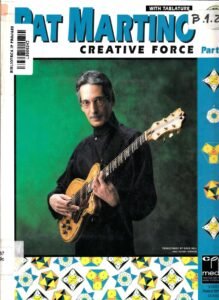
Beyond his performing and recording career, Martino was a dedicated educator. He served on the adjunct faculty of the University of the Arts in Philadelphia and gave master classes worldwide, sharing his unique insights into the guitar. His instructional videos, such as the Creative Force series, and his written works remain vital resources for serious students of the instrument. His wife, Ayako Asahi Martino, was a constant presence and support throughout his later years. Pat Martino died in his sleep on November 1, 2021, at the age of 77, leaving behind a catalog of music and a system of thought that will inspire guitarists for generations to come.
Discography
As leader
- El Hombre (Prestige, 1967)
- Strings! (Prestige, 1967)
- East! (Prestige, 1968)
- Baiyina (The Clear Evidence) (Prestige, 1968)
- Desperado (Prestige, 1970)
- The Visit! (Cobblestone, 1972)
- Pat Martino/Live! (Muse, 1974)
- Consciousness (Muse, 1975)
- Starbright (Warner Bros., 1976)
- We'll Be Together Again (Muse, 1976)
- Joyous Lake (Warner Bros., 1977)
- Exit (Muse, 1977)
- The Return (Muse, 1987)
- Interchange (Muse, 1994)
- The Maker (Paddle Wheel, 1995) – rec. 1994
- Nightwings (Muse, 1996) – rec. 1994
- All Sides Now (Blue Note, 1997) – rec. 1996–1997
- Stone Blue (Blue Note, 1998)
- Live at Yoshi's (Blue Note, 2001)
- Think Tank (Blue Note, 2003)
- Remember: A Tribute to Wes Montgomery (Blue Note, 2006)
- Undeniable: Live at Blues Alley (HighNote, 2011)
- Alone Together (HighNote, 2012)
- We Are Together Again (Warner Music Japan, 2013)
- Young Guns (HighNote, 2014)[23]
- Nexus (HighNote, 2015)
- Formidable (HighNote, 2017)
As sideman
With Eric Alexander
- The First Milestone (Milestone, 2000)
- The Real Thing (HighNote, 2015)
With Willis Jackson
- Grease 'n' Gravy (Prestige, 1963)
- The Good Life (Prestige, 1963)
- Jackson's Action! (Prestige, 1964)
- Boss Shoutin' (Prestige, 1964)
- More Gravy (Prestige, 1964)
- Live! Action (Prestige, 1965)
- Soul Night/Live! (Prestige, 1966)
- Tell It... (Prestige, 1967)
- Headed and Gutted (Muse, 1974)
- Bar Wars Bar Wars (Muse, 1978)
- Single Action (Muse, 1980)
- Nothing Butt... (Muse, 1983)
With Eric Kloss
- Introducing Eric Kloss (Prestige, 1965)
- Life Force (Prestige, 1968)
- Sky Shadows (Prestige, 1968)[24]
- Consciousness! (Prestige, 1970)
- One, Two, Free (Muse, 1972)
With Jack McDuff
- Walk on By (Prestige, 1966)
- Hallelujah Time! (Prestige, 1967)
- The Midnight Sun (Prestige, 1968)
- Soul Circle (Prestige, 1968)
- I Got a Woman (Prestige, 1969)
- Steppin' Out (Prestige, 1969)
With Charles McPherson
- From This Moment On! (Prestige, 1968)
- Horizons (Prestige, 1969)
With Don Patterson
- Holiday Soul (Prestige, 1965)
- Four Dimensions (Prestige, 1967)
- Boppin' & Burnin' (Prestige, 1968)
- Opus De Don (Prestige, 1968)
- Funk You! (Prestige, 1968)
- Oh Happy Day (Prestige, 1969)
- These Are Soulful Days (Muse, 1974)
With Trudy Pitts
- Introducing the Fabulous Trudy Pitts (Prestige, 1967)
- These Blues of Mine (Prestige, 1967)
With others
- Peter Block, Ustad Habib Khan, Ilya Rayzman and Zakir Hussain, Fire Dance (Mythos, 1997)
- Royce Campbell, Six by Six (Paddle Wheel [Japan], 1994)
- Cyrus Chestnut, A Charlie Brown Christmas (Atlantic, 2000)
- Stanley Clarke, Children of Forever (Polydor, 1973)
- Joey DeFrancesco, Ballads and Blues (Concord, 2002)
- Charles Earland Tribute Band, Keepers of the Flame (HighNote, 2002) with Joey DeFrancesco
- Gil Goldstein, Randy Brecker, David Sanborn, Herbie Mann, John Patitucci, Disney Adventures in Jazz (Walt Disney [UK], 2001)
- John Handy, New View (Columbia, 1967)
- Jimmy Heath, The Time and the Place (Landmark, 1994)
- Woody Herman, The Raven Speaks (Fantasy, 1972)
- Richard "Groove" Holmes, Get Up & Get It! (Prestige, 1967)
- Barry Miles, White Heat (Mainstream, 1971)
- The Philadelphia Experiment (Rope-a-Dope, 2001)
- Lee Ritenour, 6 String Theory (Concord, 2010)
- Michael Sagmeister, Conversation (Acoustic Music, 2000)
- Sonny Stitt, Night Letter (Prestige, 1969)